When Vendease launched in January 2020, its goal was straightforward but ambitious: use technology to bring efficiency to Nigeria’s highly fragmented and loss-prone food sector.
Starting with a marketplace model that linked restaurants and food businesses with suppliers and farms—offering 24-hour delivery—the company quickly found that a middleman role wasn’t enough.
By mid-2020, Vendease pivoted. Listening to feedback about slow deliveries, inconsistent supply quality, and poor infrastructure, the YC-backed startup took a bold step: it began buying discounted food items in bulk, storing them, and managing delivery through third-party logistics providers. That move set the stage for its future growth and was central to raising a $3.2 million seed round in October 2021.
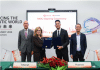
The strategy ultimately helped it secure $30 million in Series A funding—$20 million in equity and $10 million in debt—led by TLcom Capital and Partech Africa.

“We’re building technology to efficiently move food from the point of production to the point of consumption,” CEO Tunde Kara told TechCrunch. “Everything we build at Vendease — financing, logistics, warehousing, inventory management — is tailored toward that.”
Currently active in eight cities across Nigeria and Ghana, Vendease now positions itself as a plug-and-play operating system for restaurants and food businesses across Africa. The company aims to expand into new markets, deepen operations, and launch new products that boost procurement efficiency.
The stakes are high: the company estimates its target customers—including hospitals, restaurants, hotels, and schools—collectively lose up to $100 billion annually to unreliable supply chains, food waste, lack of capital, and poor data access.
To combat this, Vendease offers a series of technology “stacks” designed to cut waste, save time, and ensure timely deliveries. Over the last year, the platform claims to have:
- Moved 400,000 metric tonnes of food
- Saved customers $2 million in procurement costs
- Cut wastage losses by nearly $500,000.
- Reduced delivery times from 24 to 12 hours
- Saved over 10,000 person-hours
One key innovation is how Vendease helps businesses avoid overstocking. With next-day delivery reliability and inventory tracking, restaurants and food services no longer have to buy more than needed.
“Since businesses don’t have access to accurate data, they usually buy what they don’t need,” Kara explained. “With us, they don’t need to stock up unnecessarily, and they can track what’s left before making another order.”
The company also applies data to its Buy Now, Pay Later (BNPL) model, offering working capital to customers. In a notable shift, Vendease no longer lends from its own books but has instead partnered with banks and financial institutions to disburse credit through its platform.

So far, the embedded finance product has helped businesses access more than $12 million worth of inventory, though the company has yet to monetise the credit service directly.
Vendease’s fast-tracked equity round—remarkably quick for a non-fintech startup—was buoyed by strong investor interest, even as venture capital slowed globally. The backing of TLcom Capital and Partech Africa, both major players with pan-African reach, signals confidence in Vendease’s ability to scale efficiently in a tough environment.
“Vendease can unlock significant value in Africa’s fragmented food supply chain,” said Andreata Muforo (TLcom Capital) and Cyril Collon (Partech Africa) in a joint statement.
Other participants in the round included VentureSouq, Hustle Fund, Hack VC, GFR Fund, Kube VC, Magic Fund, and Kairos Angels. The $10 million debt portion of the Series A was raised from local financial institutions.
Despite the challenges of currency devaluation, inflation, and global food shortages, Vendease says it is shielding customers from the worst impacts by providing price stability and dependable stock levels.
The company believes there’s still massive room for growth. Competitors like OneOrder and TopUp Mama are entering the space, but Kara and his team remain optimistic.
“What excites us is the impact we can have as we extend and entrench our technology within Africa and beyond,” said Kara. “That’s what keeps us going.”
As it transitions from a startup to a staple of the African food ecosystem, Vendease’s focus remains on efficiency, scale, and sustainability—with its tech stack at the centre of the mission to revolutionise how food gets from farms to tables across the continent.