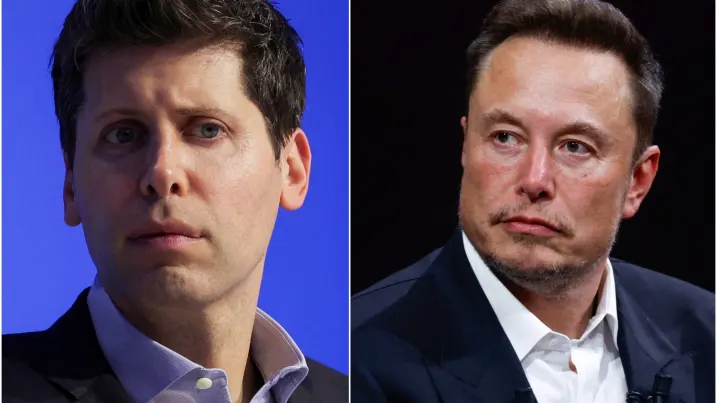
A California court has dismissed Elon Musk’s fraud lawsuits against OpenAI and Microsoft after nine jurors delivered a unanimous verdict that the lawsuits were brought to court too late.
Elon Musk had alleged in his 2024 lawsuit that that OpenAI and CEO Sam Altman abandoned the company’s founding nonprofit mission to develop safe, open-source AI for humanity. He later amended his complaint to include Microsoft, seeking up to $150 billion in damages.
Musk argued that OpenAI and Microsoft engaged in anticompetitive practices, such as stifling investment in rival companies (like Musk’s xAI) and sharing sensitive information.
However, the jurors concluded that whatever damages Musk might have experienced occurred prior to the legal deadline for submitting his claims.

Musk’s case failed to persuade jurors that he had a legitimate claim, despite the trial’s focus on whether and when Altman and the other defendants had made and breached promises to him.
Specifically, OpenAI has presented a statute of limitations defence, which aimed to demonstrate that whatever damages Musk wanted to sue had occurred before 2021. (The precise date changed depending on the charge; for the first count, it was before August 5, 2021; for the second count, it was August 5, 2022; and for the third count, it was November 14, 2021.) In the end, the jury was persuaded by that reasoning, which resulted in a brief deliberation period.
Judge Yvonne Gonzalez Rogers stated following the verdict, “I was prepared to dismiss on the spot because there was a substantial amount of evidence to support the jury’s finding.”
As a result of the case’s resolution, OpenAI’s primary threat—a potential restructuring—has been eliminated ahead of its anticipated IPO.
After the verdict, Bill Savitt, the lead lawyer for OpenAI, stated, “It did not take [the jury] two hours to conclude… that Mr Musk’s lawsuit is nothing more than an after-the-fact contrivance that bears no relationship to reality.” “They kicked it to the side, which is precisely where it belongs. This lawsuit is an attempt to undermine a rival in a disingenuous way.
The decision was applauded by Microsoft, which Musk sued for allegedly assisting and abetting OpenAI’s alleged breach of charitable trust. The company “remained committed to our work with OpenAI to advance and scale AI for people and organisations around the world,” according to a company representative.
The decision was made at a hearing to ascertain Musk’s possible damages in the event that the verdict had been reversed. The judge seemed persuaded by the comparison Musk’s attorneys made between his investments in a for-profit firm and his philanthropic efforts, even if that debate is currently irrelevant.
She informed Dr Paul Wazzan, the expert who came up with Musk’s estimate of OpenAI and Microsoft’s illegal benefits at his expense—roughly $78.8 billion to $135 billion—that “your analysis seems to be devoid of connection to the underlying facts.”
Musk seemed to view the dismissal’s procedural reasons as a moral victory in a tweet following the decision. Anyone who follows the case closely would undoubtedly conclude that Altman & Brockman did, in fact, benefit themselves by robbing a charity.
”When they did it is the only question,” Musk wrote. “I will file an appeal with the Ninth Circuit because it would be extremely detrimental to charitable giving in America to set a precedent for looting charities.”