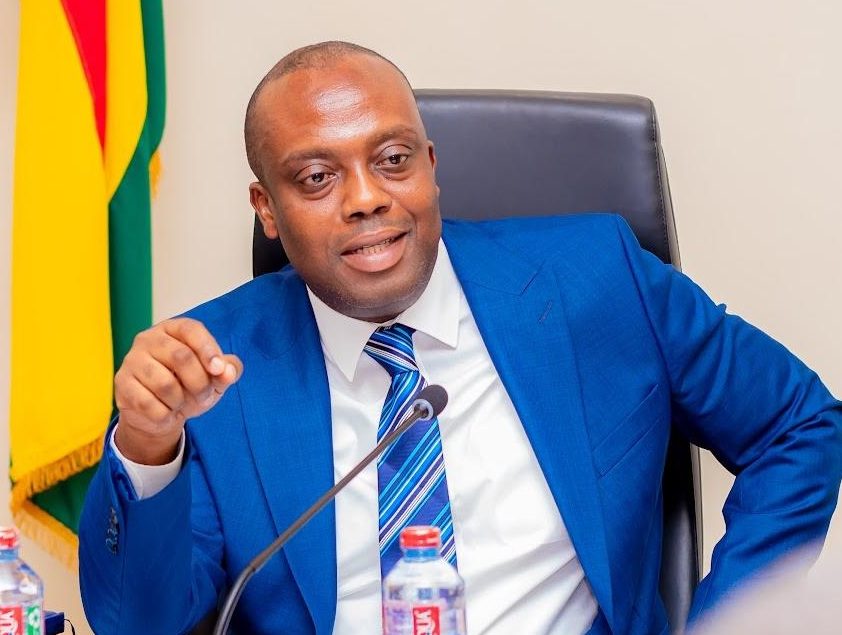
Government will resist pressure for excessive spending and borrowing as it seeks to preserve Ghana’s economic gains, Deputy Finance Minister Thomas Ampem-Nyarko has said.
Mr Ampem-Nyarko said the recovery had come at a heavy cost to households, businesses and the private sector, whose sacrifices had helped restore economic stability.
He said government’s approach was to prioritise essential programmes, cut waste and ensure spending matched available resources.
“Fiscal discipline does not mean the lack of spending. It means the quality of expenditure,” he said.

He was delivering a keynote address at the Business Roundtable Extended under the theme “After the Corrections: Building Resilient Economic Pillars for the Next Decade.”
Mr Ampem-Nyarko said government could not meet every demand for infrastructure and other projects simultaneously. The commitment control process, he said, was helping to manage competing demands and keep expenditure within approved limits.
No rush to borrow
Ghana will also not rush back to the international bond market simply because it has regained access to borrowing, he said.
“Our target is to achieve an investment grade so that we can borrow at a reasonable price,” Mr Ampem-Nyarko said.
He said the government would borrow only when the conditions were right, rather than use access to the market as a reason to raise new debt.
Discipline after the IMF
Mr Ampem-Nyarko said the government intended to maintain the same approach after the IMF programme and would not allow an election year to weaken its resolve.
He said the decision to pursue a longer programme was partly intended to avoid creating the impression that fiscal restraint was necessary only while the IMF was present.
President John Mahama, he said, wanted to be remembered for sustaining Ghana’s macroeconomic gains.
The Deputy Finance Minister said approved government programmes would continue to receive funding, with the Finance Ministry reviewing budget and capital expenditure performance ahead of the final quarter of the year.
“Once your programme is in the budget, it will be funded. If it is not in the budget, it cannot be funded,” he said.
Fiscal Council
Mr Ampem-Nyarko said the Fiscal Council would provide an additional safeguard after the IMF programme.
Parliament last week approved the President’s nominees to the council, which is expected to monitor fiscal developments and publish quarterly reports.
He described it as a “lookout policeman” that would help keep government accountable.
On illegal mining, Mr Ampem-Nyarko said government recognised the need to protect the environment and sustain discussions on the issue. Its absence from the programme under discussion, he said, did not mean government failed to recognise its effects.
He also said government had not built international reserves in 2025 and did not intend to do so in 2026.