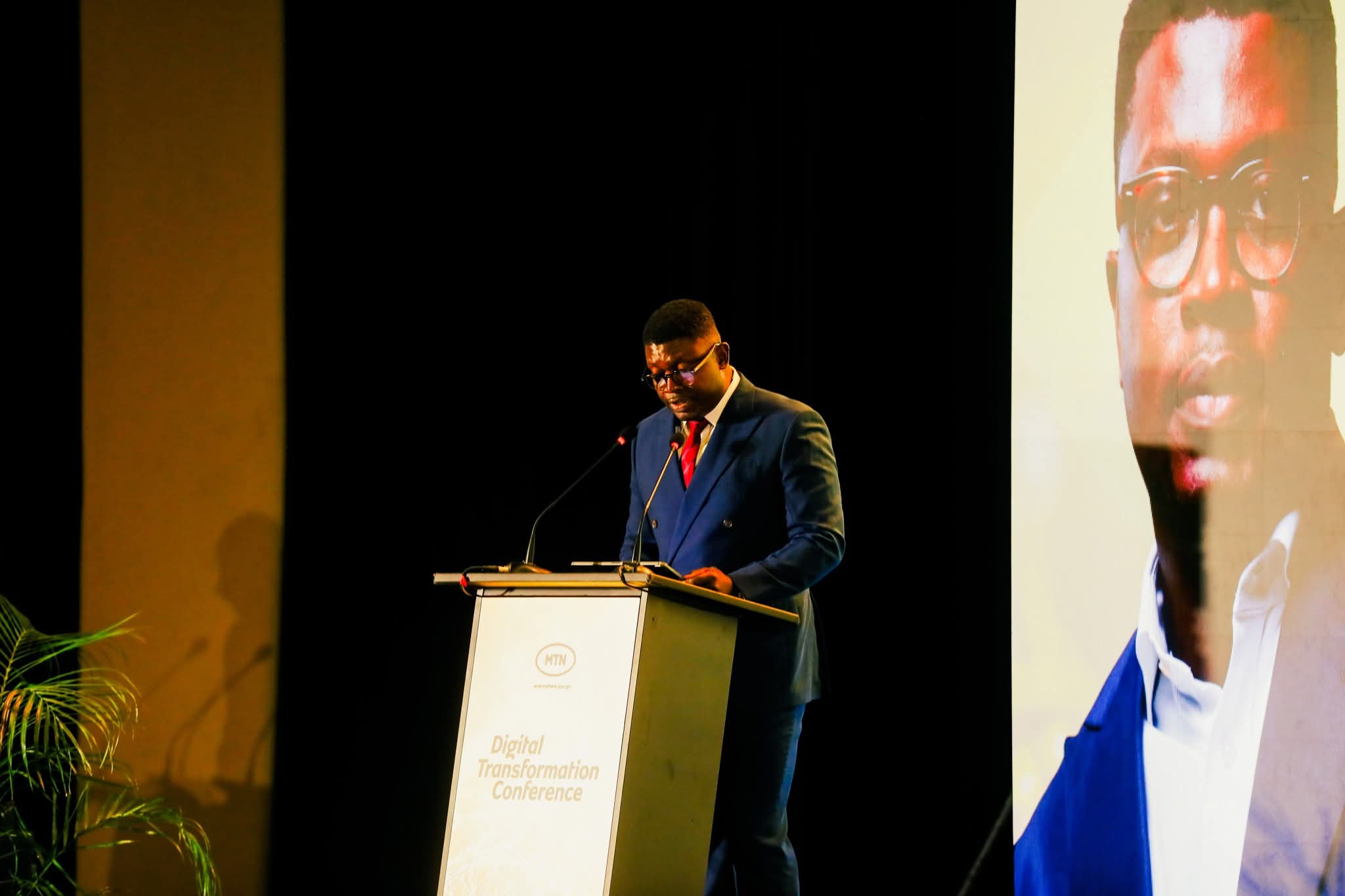
Chief Executive Officer of Dentsu Ghana, Andrew Ackah, has called on African businesses and telecommunications companies to reposition themselves within the rapidly evolving digital economy rather than resist the growing influence of global technology platforms.
Speaking at the Digital Transformation Conference 2026 in Accra, Mr Ackah said the dominance of digital giants such as Meta and Google continued to reshape advertising revenues, consumer attention and the broader digital ecosystem.
According to him, the strategic challenge for businesses was no longer about resisting the internet, but about determining how organisations could position themselves effectively within it.
Mr Ackah noted that telecommunications companies and digital businesses must evolve beyond simply providing internet access and instead become trusted platforms that enable both consumers and businesses to participate meaningfully in the digital economy.

He argued that companies such as Google and Meta should not necessarily be viewed purely as competitors, but also as partners that still depend heavily on telecom infrastructure and broader digital ecosystems to connect with consumers.
“The opportunity is therefore not to fight the internet, but to build stronger positions within it,” he stated.
Mr Ackah further observed that millions of young Africans and entrepreneurs were using mobile technology to build businesses, communities and livelihoods, stressing that organisations must move faster to remain relevant in a rapidly changing digital landscape.
He warned that companies could not continue operating outdated systems while the rest of the world accelerated technologically, adding that the future would belong to organisations capable of innovating quickly, building stronger trust with consumers and delivering integrated digital experiences that solve practical problems.
Mr Ackah said Africa had a unique opportunity to lead global digital transformation by developing resilient, technology-driven ecosystems tailored to the realities of African markets rather than replicating outdated foreign models.
He maintained that innovation would not emerge from protecting legacy systems or remaining trapped in old structures, but through openness, collaboration, integration and the willingness to transform.
He added that businesses likely to succeed in the future would be those that move beyond merely participating in the digital economy to actively shaping it.