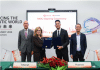
The State of Inclusive Instant Payment Systems (SIIPS) 2025 Report was released today, and it states that the value of instant payment transactions in Africa over the last one year reached US$2 trillion in 64 billion transactions, indicating that Africa’s digital payments landscape is expanding at a record pace, and moving fast towards more inclusive interoperable financial systems.
The report, put together by AfricaNenda Foundation, in partnership with the World Bank and the United Nations Economic Commission for Africa (UNECA), reveals how instant payment systems (IPS) are driving economic participation, innovation, and opportunity across the continent.
Now in its fourth edition, SIIPS 2025 is Africa’s leading benchmark for inclusive instant payment systems (IIPS). The report shows that 36 systems are now live across 31 African countries, with five launched over the past year alone. Collectively, they processed 64 billion transactions worth nearly US$2 trillion in 2024, underscoring Africa’s rapid transition to digital finance.

During the launch in Eswatini, the CEO of AfricaNenda Foundation, Dr. Robert Ochola said “Inclusive instant payments are transforming how Africans connect economically,” adding that “The findings of SIIPS 2025 show clear progress — more countries are adopting instant payment systems, and more people are gaining access to digital financial services that support livelihoods, trade, and growth across the continent.”

Acting Global Director, Finance, Competitiveness & Investment Global Department at the World Bank, Niraj Verma, noted that “The latest SIIPS report shows steady progress across Africa in the uptake of fast payments,” which, according to her, is promising and represents a great start, but there is much work to be done.
She called on countries without fast payment systems to begin implementations, and those already operating them to focus on greater inclusivity, innovation, and affordability in digital payment services.
“At the World Bank Group, we believe fast payments development promotes broader goals such as financial inclusion, job creation, and trade facilitation. Through Project FASTT, the World Bank continues to help countries build and strengthen fast payment ecosystems through financing, technical assistance, and capacity building,” she added.
Nigeria Shines

The report highlights increasing interoperability across systems, with half of Africa’s IPS now connecting banks, mobile money operators, and fintechs through cross domain platforms. But of the 36 active IIPS, it was only Nigeria’s Instant Payments (NIP), hosted by the Nigerian InterBank Settlements Systems (NiBSS), which became the first system to achieve mature inclusivity on the AfricaNenda Inclusivity Spectrum, while ten others advanced to progressed levels.
Ghana’s GIP (GhIPSS Instant Pay) and MMI (Mobile Money Interoperability) which was the first to reach progressed stage in 2022 when the first edition of SIIPS was launched in Kigali, has remained at the progressed for the past four years.
Meanwhile, beyond person-to-person (P2P) transfers, more systems are enabling person-to-business (P2B), government-to-person (G2P), and cross-border payments.
People and Access at the Center
Research conducted in Angola, Côte d’Ivoire, Madagascar, and Tunisia finds that individuals are adopting digital payments faster than merchants, particularly in emerging and nascent markets. Adults over 30 and those with regular income remain the most active users, while young adults and women continue to face barriers such as fraud concerns, lack of identification, and limited access to agents.
Between 50 and 75 per cent of cash-first users cited fraud risks as a key barrier to adoption. Addressing these challenges, the report notes it will be critical to ensure that digital payments are safe and accessible for all.
“For digital payments to reach everyone, inclusion must be intentional,” said Dr. Mactar Seck, Chief of Section, Innovation and Technology, United Nations Economic Commission for Africa (UNECA). “The data from SIIPS 2025 gives policymakers and regulators the confirmation they need to design ecosystems that serve marginalized parts of Africa’s communities. That is, women, youth, the informal sector and those in rural communities at large.”
Unlocking the Next Phase of Africa’s Digital Economy
The report points to significant opportunities for growth through digital public infrastructure (DPI) integration, government-to-person (G2P) payments, and cross-border interoperability. With 36 countries now having live IPS, digital IDs, and data protection laws, better coordination across these systems could make Africa’s financial ecosystem more inclusive and secure. financial ecosystems.
Scaling G2P and cross-border use cases, the report finds, will require improved digital identity coverage, regulatory harmonization, and stronger collaboration between public and private sectors. These efforts are crucial to Africa’s ambition of creating a single, digitally connected market.
The SIIPS 2025 launch event, hosted by the Central Bank of Eswatini (CBE) from November 11–14, 2025, brought together central banks, payment operators, policymakers, development partners, and the media from across the continent to discuss how inclusive instant payments can drive Africa’s digital future.
The full SIIPS 2025 Report is available at www.africanenda.org/en/siips2025, offering in-depth data insights, country case studies, and evidence-based recommendations on Africa’s evolving payments landscape.