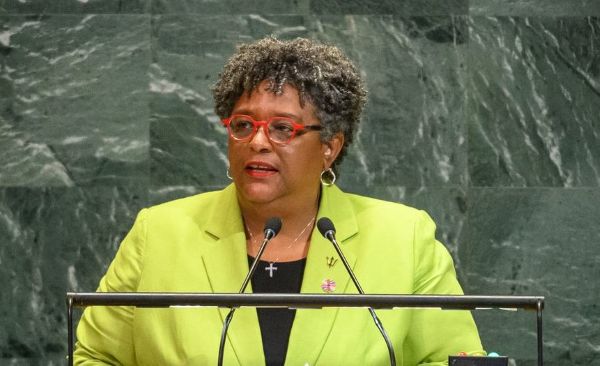
The Prime Minister of Barbados, Mia Amor Mottley has called for greater global accountability, recognition and reparatory justice to address the enduring consequences of the enslavement of Africans and the transatlantic slave trade.
Addressing the High-Level Consultative Conference on the Next Steps to the Landmark United Nations Resolution on the Trafficking of Enslaved Africans, Prime Minister Mottley stressed the need for the international community to move beyond historical acknowledgement and commit to meaningful measures that promote healing, restoration and justice.
She commended Ghana for its leadership in advancing the United Nations Resolution on reparatory justice, describing the country’s efforts as a significant contribution to the global campaign for historical redress.
According to Prime Minister Mottley, the pursuit of reparations is fundamentally rooted in justice, reconciliation and the restoration of human dignity.

She noted that the effects of slavery and the transatlantic slave trade continue to be felt across generations, particularly through persistent social and economic inequalities affecting people of African descent.
Highlighting the Caribbean Community’s (CARICOM) decade-long advocacy on reparatory justice, she called for coordinated and sustained collaboration among governments, international organisations and other stakeholders to advance the reparations agenda.
The Barbadian leader identified investments in education, healthcare, land reform and economic empowerment as critical components of meaningful reparatory action.
She argued that such initiatives would help address historical injustices while creating opportunities for sustainable development and social transformation.
Prime Minister Mottley also outlined key elements of CARICOM’s revised Ten-Point Plan for Reparatory Justice. The framework includes formal apologies for slavery and colonialism, cultural restitution, public health programmes, educational development, psychological rehabilitation, debt relief and measures aimed at strengthening sovereignty and sustainable development.
She reaffirmed CARICOM’s commitment to working closely with African nations and other partners to advance reparatory justice, emphasising the importance of building a future founded on dignity, healing and shared progress.
The conference formed part of ongoing international efforts to advance dialogue and action following the adoption of the landmark United Nations Resolution on the trafficking of enslaved Africans, with participants examining practical steps towards achieving recognition, accountability and reparatory justice for affected communities worldwide.