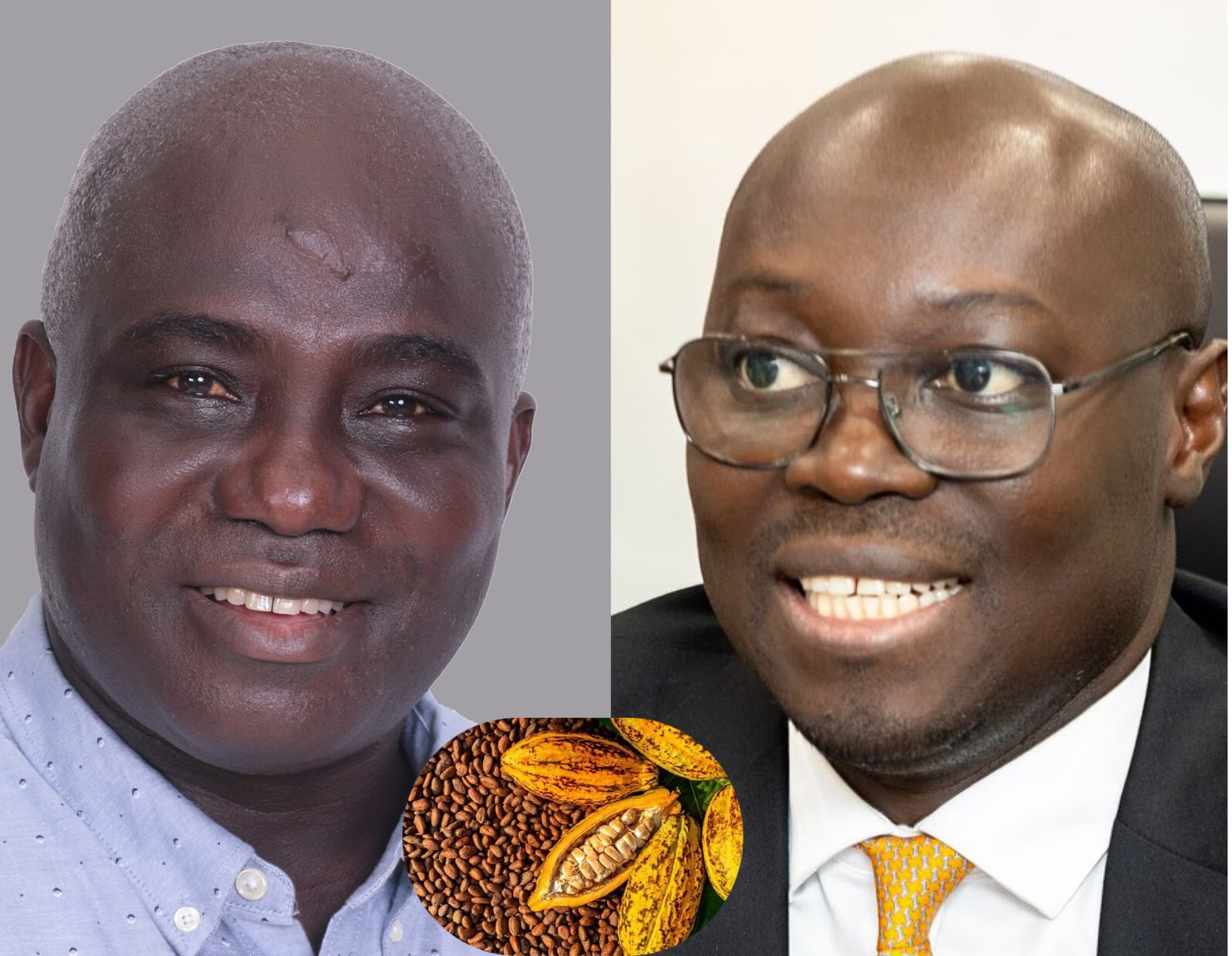
In the heat of the 2024 election campaign, the National Democratic Congress (NDC) made a bold promise: to raise the producer price of cocoa to GHC 6,000 per 64kg bag. This pledge was repeated by senior party figures, including then-Minority Leader and now-Finance Minister, Dr. Cassiel Ato Forson, and Ranking Member on the Agriculture Committee, Hon. Eric Opoku.
At the time, Ghana’s exchange rate was roughly GHC 15 to USD 1, meaning the NDC was effectively valuing a bag of cocoa at $400 — a significant offer that many farmers held onto with hope.
Fast forward to August 2025. Ghana’s cedi has appreciated — with the dollar now trading at around GHC 10.50. By the same valuation logic the NDC used during their campaign, $400 today would equal GHC 4,200. Still not GHC 6,000, but much closer. And yet, the new cocoa price announced by Dr. Forson is GHC 3,228.75 — a modest increase from the previous GHC 3,100, but one that falls well below both the campaign promise and current value benchmarks.
To be clear, this new figure reflects 70% of the FOB (Free On Board) price, calculated from a global cocoa price of $5,040 per tonne. That 70% benchmark was also part of the NDC’s campaign — and it’s commendable that they’ve at least met that target. But that was never the headline. The promise that made waves across farming communities was GHC 6,000 per bag. That’s what farmers remembered. That’s what earned trust and votes.

What’s more troubling is that it took seven months in office for the NDC to adjust the cocoa price at all. No increases. No interim relief. Just excuses — from COCOBOD debt, to procedural delays, to currency movement. But now that the cedi has strengthened — ironically making it cheaper in local terms to fulfill their dollar-based promise — the government is no longer referring to the original GHC 6,000 target. It’s quietly been buried.
This is more than an economic issue. It’s a credibility issue.
Ghana’s cocoa farmers — the backbone of rural livelihoods and key contributors to national foreign exchange — deserve more than campaign-season flattery and post-election amnesia. You cannot dangle GHC 6,000 in front of struggling households, reap the political goodwill, and then pretend the promise was conditional all along.
What’s unfolding now is not just under-delivery — it’s deception by numbers. A subtle rewriting of the narrative that hopes farmers and citizens won’t remember the figures that were boldly thrown around on campaign platforms.
Yes, 70% of FOB is a decent benchmark. But that wasn’t the campaign highlight. If the NDC believed in GHC6,000 when the dollar was GHC15, then logic — and honesty — would require them to adjust proportionately when the dollar drops to GHC10.50.
Anything less isn’t just poor economics. It’s political dishonesty.
Until the government comes clean and either explains the broken promise or closes the gap, the “GHC 6,000 cocoa price” will remain what it has become: a campaign illusion, vanished in the harsh light of governance.
The Author, Yaw Owusu Bempah, is a concerned citizen and commentator on digital national policy and political accountability.