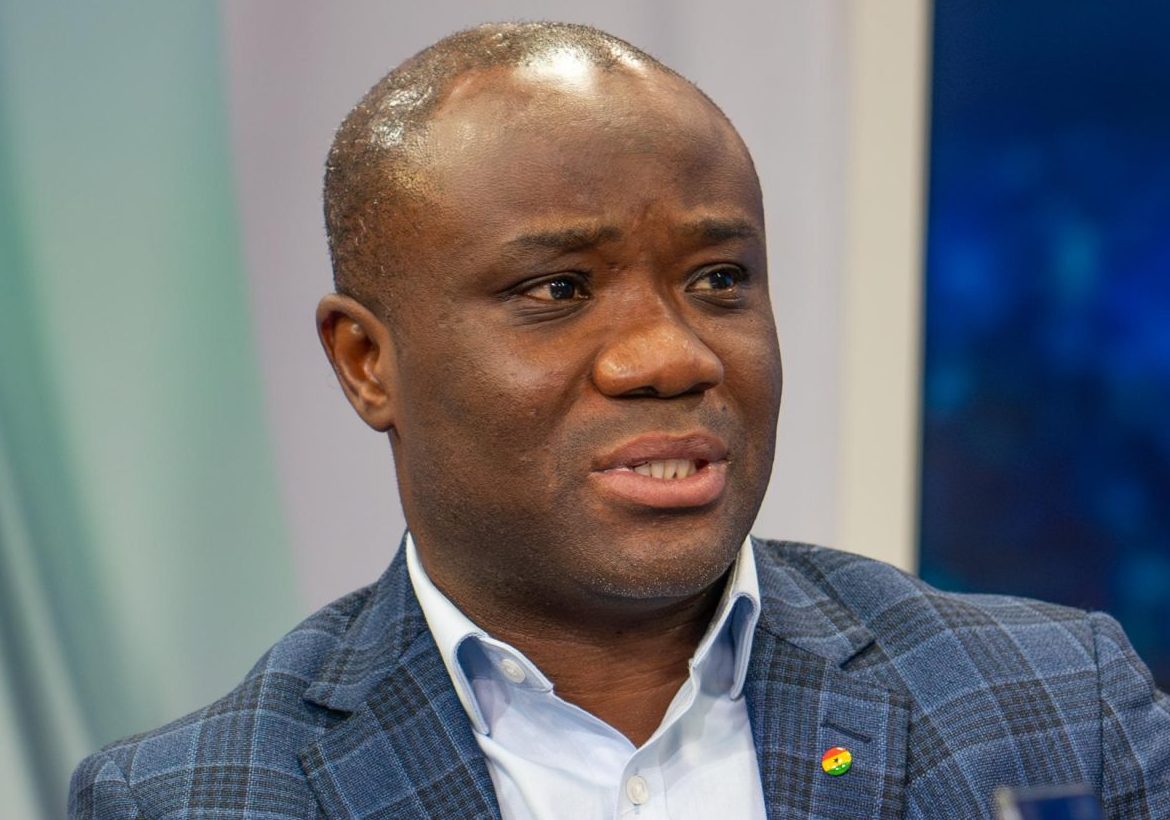
Presidential spokesperson Felix Kwakye Ofosu has defended the government’s industrialisation agenda, arguing that sustainable manufacturing growth requires careful planning, reliable electricity and access to affordable financing rather than slogans.
Mr Kwakye Ofosu said successive governments had introduced policies to promote local manufacturing long before the New Patriotic Party (NPP) popularised its industrialisation agenda, citing Ghana’s Free Zones programme introduced in 1995 under the Jerry Rawlings administration.
He said the Free Zones concept created designated areas where industries could operate with incentives and contributed to the establishment of hundreds of factories.
According to him, the Ghana Investment Promotion Centre (GIPC) has data showing the number of manufacturing businesses and factories established since the initiative was introduced.

“The idea of encouraging people to establish manufacturing plants or factories is not new. It did not require songs and slogans to make it happen,” he said.
Mr Kwakye Ofosu criticised the NPP’s approach to industrialisation, arguing that its flagship industrialisation programme had not significantly reduced Ghana’s dependence on imported goods.
He said Ghana continued to rely heavily on imports and that any new industrial policy must be designed to enable the country to produce, at scale, the goods and products required for domestic consumption.
He identified reliable and affordable electricity as a critical requirement for the success of the government’s industrialisation plans.
According to him, the government is working to expand electricity generation from green sources while engaging potential partners to establish power plants and other energy-producing facilities capable of supplying industries at lower costs.
“We need to have sufficient electricity generation capacity to meet the demand that will arise as more manufacturing companies expand or new factories are established,” he said.
Mr Kwakye Ofosu also identified access to finance as another major requirement for industrial expansion, saying businesses would need adequate capital and affordable credit to expand their operations and create jobs.
He said the government was working on financing arrangements to support businesses as part of the broader industrialisation programme.
He explained that the government was taking time to establish the necessary foundations before fully rolling out the programme to ensure that it was sustainable and capable of delivering its intended results.
On employment, Mr Kwakye Ofosu said figures published by the Ghana Statistical Service showed that about 300,000 people had gained employment across various sectors.
He stressed that the employment gains were not limited to the public sector, with a significant number of people employed by private-sector businesses.
He argued that the employment figures demonstrated that opportunities were being created within the economy.
“Governments are making efforts to address the unemployment situation, and the employment figures provide some indication of the opportunities being created,” he said.