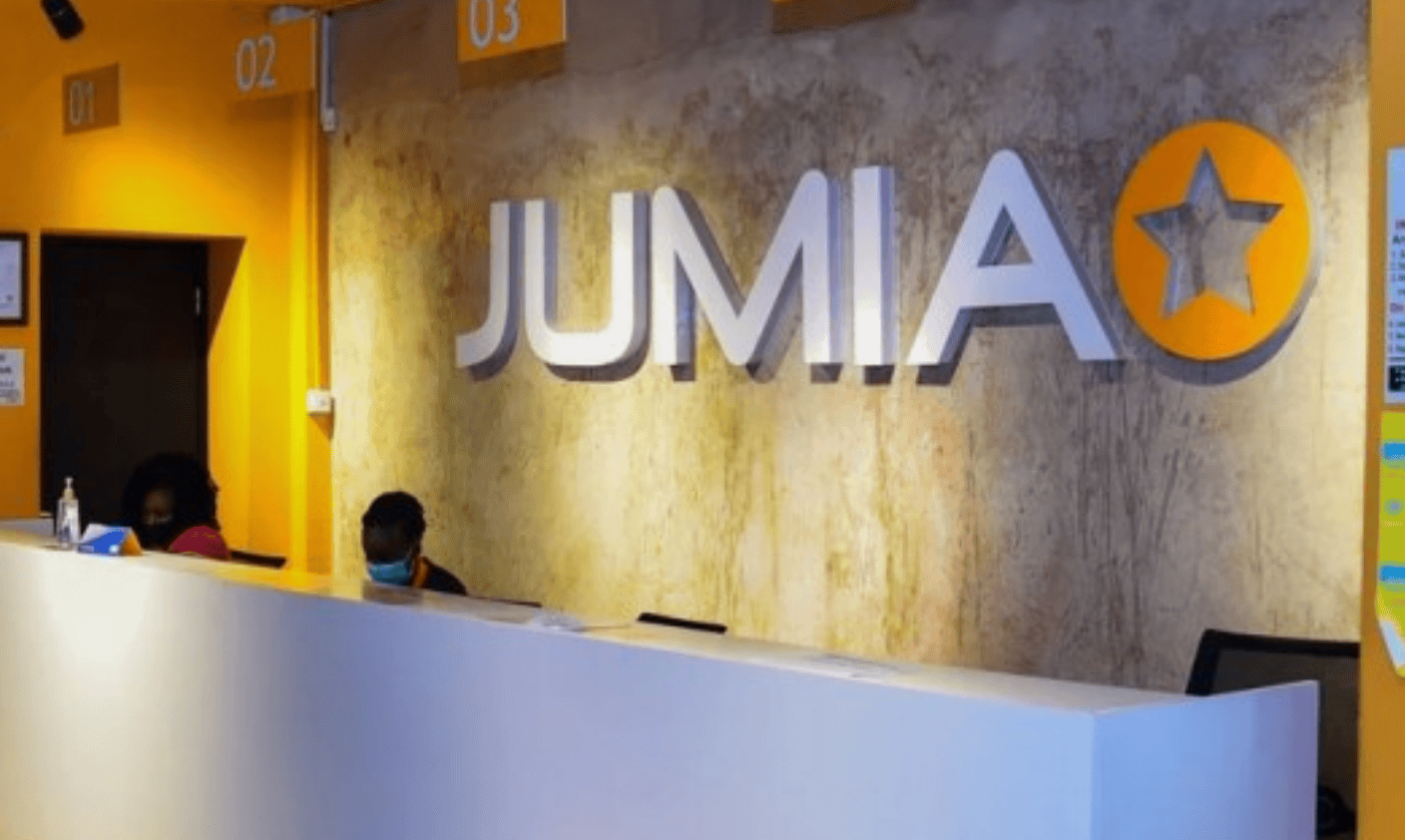
Jumia Technologies AG has narrowed its losses and strengthened its unit economics in the second quarter of 2026, while securing $50 million in fresh capital to support its path towards profitability despite a slowdown in merchandise volume growth.
The pan-African e-commerce company reported second-quarter revenue of $52.0 million, representing a 14% year-on-year increase and 15% growth in constant-currency terms. Adjusted EBITDA losses narrowed by 36% to $8.7 million, beating market expectations, while gross profit rose to 14.2% of Gross Merchandise Value (GMV).
Jumia’s shares were broadly flat over the week following the results.
Alongside its earnings, Jumia announced a $50 million private placement at $5.52 per share. The International Finance Corporation (IFC), the private-sector arm of the World Bank, committed $25 million, with existing shareholder Axian Telecom and other investors making up the remainder.

Chief Executive Officer Francis Dufay said the capital raise was driven primarily by the strategic opportunity to bring the IFC on board rather than an immediate need to strengthen the company’s balance sheet.
“We’ve been very clear about the fact that we can reach breakeven without additional cash,” Dufay said.
The company ended June with $48.3 million in cash after using $14.3 million during the quarter. Management nevertheless expects the new capital to provide additional flexibility, including pre-funding working capital ahead of the fourth-quarter shopping season and investing selectively in warehouse automation.
Guidance cut on weaker hardware demand
Jumia lowered its full-year GMV growth outlook to between 20% and 30%, from its previous range of 27% to 32%, citing external supply-chain pressures.
Global shortages of memory chips and CPUs have affected high-value categories such as smartphones and computers, while shipping disruptions linked to the conflict in the Middle East have added pressure to logistics costs.
Despite the weaker volume outlook, Jumia maintained its target of achieving Adjusted EBITDA breakeven and positive cash flow in the fourth quarter of 2026, with full-year profitability expected in 2027.
Dufay said improvements in gross margins, take rates and operating costs were helping the company absorb weaker hardware sales without changing its profitability targets.
“Our gross profit ratio increased to 14.2%, and we keep getting savings in absolute terms on G&A and tech costs while scaling volumes,” he said.
Nigeria leads regional growth
Performance varied significantly across Jumia’s markets.
Nigeria recorded 36% GMV growth, supported by direct sea-freight routes from China and Turkey that helped the company compensate for shortages of electronics by increasing the availability of lower-priced fashion and home goods.
Ivory Coast, however, faced weaker demand following a 60% decline in cocoa farmgate prices. Dufay rejected suggestions that the company was considering a major pullback from the market, saying usage and unit economics had improved substantially.
The company also continued expanding its fulfilment network beyond major cities. Pickup stations accounted for 75% of total package shipments, helping Jumia contain delivery costs as fuel and shipping charges increased.
Fulfilment expenses fell 7% year-on-year to $2.04 per order.
Dufay said the pickup-station model remained central to Jumia’s strategy, particularly in markets such as Nigeria where customers often prefer collecting orders rather than receiving them at home.
Cost discipline and AI reshape operations
Jumia reduced its workforce by 11% during the quarter to 1,770 employees, ahead of its internal restructuring schedule.
The company is also increasing its use of artificial intelligence in areas including catalogue quality control, vendor onboarding and customer support.
Dufay said AI tools had reduced the number of employees required to manually review new products listed by vendors, with staff increasingly focused on handling exceptions rather than routine checks.
The efficiency gains form part of Jumia’s broader effort to reduce its cost base while continuing to grow transaction volumes.
Competitive pressure remains limited
Jumia also faces growing competition from international e-commerce platforms such as Temu. Dufay argued that Jumia retains an advantage because its operations are tailored to the realities of African markets, including customs procedures, logistics infrastructure and consumer preferences.
He highlighted cash-on-delivery as one example, noting that customers in several markets value the ability to inspect products before paying.
For the second half of 2026, Jumia plans to use part of its new funding to secure inventory ahead of the peak shopping season while continuing targeted investments in fulfilment infrastructure and automation.
Analysts remained positive following the results. Benchmark analyst Fawne Jiang maintained a Buy rating and an $18 price target, citing improvements in marketplace fundamentals, monetisation and earnings quality. Craig-Hallum analyst Ryan Sigdahl also retained a Buy rating, pointing to management’s ability to control costs despite a volatile operating environment.
With hardware shortages weighing on GMV growth, Jumia’s near-term performance will depend increasingly on whether stronger monetisation, lower operating costs and improved fulfilment efficiency can offset weaker high-ticket sales.
For management, the key test remains unchanged: turning improving unit economics and cost discipline into sustainable positive cash flow by the end of 2026.