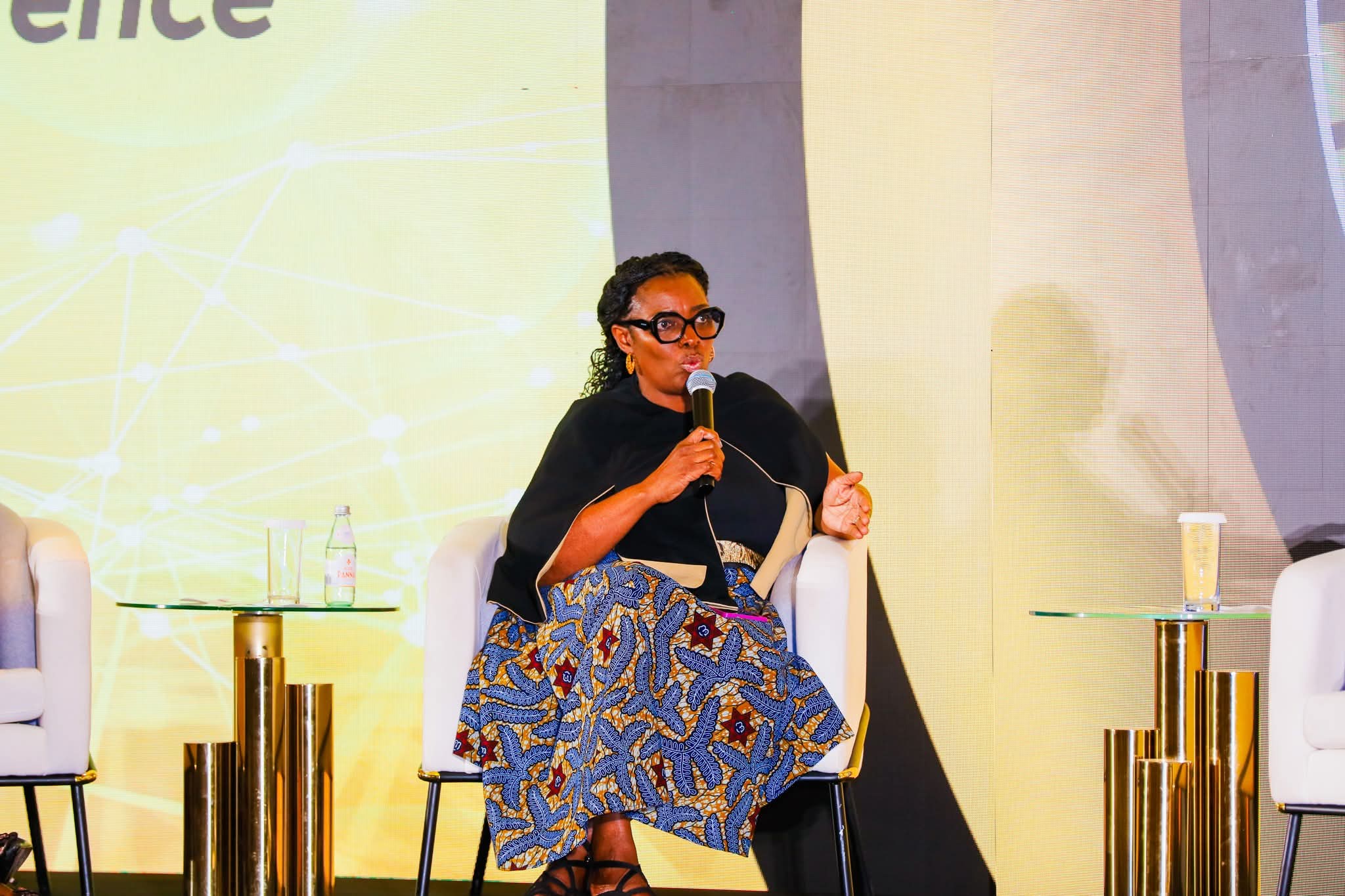
General Manager for Consumer Marketing at MTN Ghana, Nana Asantewaa Amegashie, has called on businesses and telecommunications companies to rethink digital transformation beyond technology itself and focus instead on the human needs that technology continues to fulfil.
Speaking during a panel discussion at the Digital Transformation Conference 2026 in Accra, Ms Amegashie said the rapid evolution of digital technology was fundamentally reshaping consumer behaviour, communication, commerce and competition across industries.
According to her, while technology continues to evolve at extraordinary speed, the underlying desires driving human behaviour have remained unchanged throughout history.
“We all seek connection, belonging, safety, knowledge, progress, convenience, opportunity and entertainment. These needs have existed since the beginning of humankind,” she said.

She explained that although communication methods had evolved dramatically over time — from handwritten letters and postal systems to email, smartphones and instant messaging platforms — the core human motivations behind those interactions had remained constant.
“Human desires are omnipresent; technology simply enhances and fulfils them more efficiently,” she stated.
Ms Amegashie noted that the widespread adoption of smartphones, declining data costs, and expanding broadband access had accelerated one of the most significant behavioural shifts in modern history.
She said digital ecosystems had now integrated payments, shopping, entertainment and communication into continuous consumer loops operating in real time.
According to her, the traditional linear consumer journey, where brands largely controlled communication from awareness to purchase, had been replaced by dynamic consumer-led interactions occurring simultaneously across multiple digital platforms.
“The model has now been replaced by fluid, dynamic, multi-tasking consumer loops controlled by the consumer themselves, operating at unprecedented speed from discovery to purchase in real time,” she said.
Ms Amegashie stressed that businesses seeking long-term relevance could no longer rely solely on maintaining a digital presence.
She argued that organisations must move beyond what she described as “digital competency” towards achieving “digital excellence” by proactively anticipating future consumer needs and rapidly transforming insights into action.
“It is not about possessing the most data or the most advanced technology. It is about closing the gap between insight and action faster than the consumer reaches the point of need,” she said.
She further indicated that achieving this level of competitiveness required companies to invest heavily in infrastructure, analytics capabilities, customer intelligence systems and organisational agility.
At the centre of this transformation, she said, was the development of a single customer view through advanced customer data platforms capable of integrating information from multiple touchpoints including billing systems, customer service interactions, behavioural signals, network activity and location intelligence.
Ms Amegashie stated that businesses must increasingly adopt real-time data processing systems and artificial intelligence-driven analytics to generate predictive consumer insights while ensuring responsible data governance and privacy-by-design frameworks.
She also highlighted what she described as a major strategic opportunity for telecommunications companies within the digital economy.
According to her, global technology companies such as Google and Meta currently rely heavily on telecommunications infrastructure financed and maintained by operators including MTN Group, while capturing a significant share of digital advertising revenues and customer relationships.
She argued that telecom operators possess several unique competitive advantages, including verified identity systems, mobile money transaction data, rich location intelligence, offline behavioural insights, and access to millions of customers at scale.
“The strategic opportunity is therefore to consolidate these assets into unified customer intelligence platforms,” she said.
Ms Amegashie explained that such platforms could eventually support private digital marketplaces and advertising ecosystems built on verified behavioural intelligence rather than inferred assumptions.
According to her, these ecosystems could provide businesses with real audience segmentation, contextual targeting linked to movement patterns, real-time campaign analytics and access to authenticated premium advertising inventories.
She questioned why telecommunications companies should surrender the digital advertising economy entirely to global technology platforms when they possess infrastructure and customer intelligence capabilities that are difficult to replicate.
“That may well define the next era of digital competition,” she added.