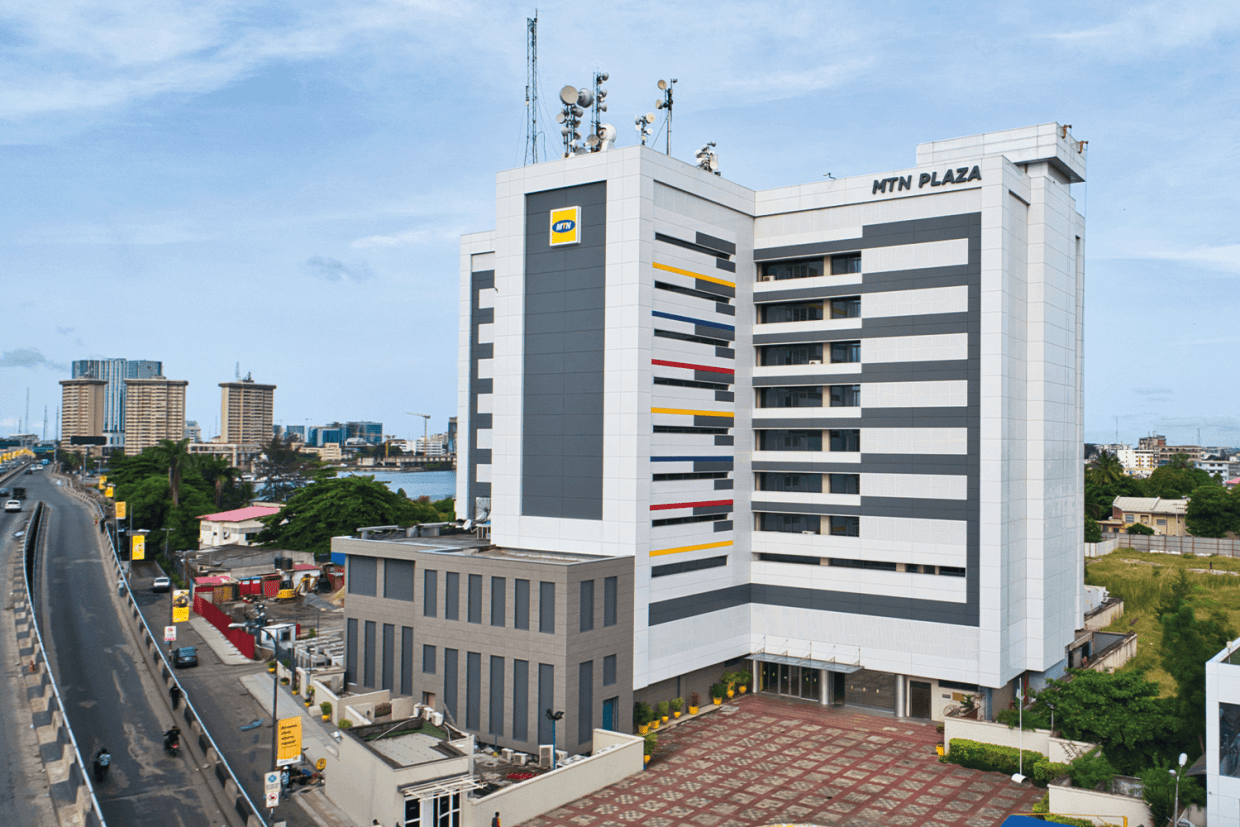
MTN Nigeria said in its recent Sustainability Report that it saved $5.89 million in 2025 by using more gas-powered electricity for its operations.
The company said even though currently, diesel still makes up majority of its energy mix, it is considering a move to gas alongside a wider energy mix to help reduce operating costs even further.
According to MTN, its annual energy use was over 1 million gigajoules, or over 277 million kilowatt-hours, indicative of the size of its activities, which include base stations, data centres, switching facilities, offices and its fleet of vehicles.
This amount of energy consumption is equal to the energy in about 25 million litres of diesel, or enough to power 25,000 to 30,000 Nigerian homes per year. The price and source of this energy are becoming crucial to sustainability and profitability as data demand rises.

As growing energy costs surpass profits from higher data consumption, MTN projects a 2.0% margin drop, or roughly ₦140 billion ($102 million) at current revenue levels. Data revenue increased by 56.2% this quarter, but margins are under strain because each gigabyte now costs more to supply.
Per MTN Nigeria’s Q1 2026 report, the company expedited the implementation of solar-hybrid and gas-powered solutions, virtually doubling its capital investment to ₦390.3 billion ($283.74 million), a 92.8% year-over-year increase.
Nigeria’s estimated 215.19 trillion cubic feet (tcf) of natural gas reserves serve as a foundation for the approach. Ongoing supply issues, however, might restrict this shift and maintain reliance on diesel power if they are not resolved. Per the reports, petrol shortages caused 16 of the nation’s 33 power plants to be idle or working below capacity in early 2026.
According to the sustainability report, diesel accounted for 58.11% of MTN Nigeria’s total energy use in 2025, far more than gas-powered Independent Power Producers (23.63%) and electricity from the national grid (18.04%).
Solar and other renewable energy sources only made up 0.05% of the company’s total power mix, demonstrating how marginal clean energy is still.
”Our Scope 1 and Scope 2 greenhouse gas emissions stood at approximately 106,588 tonnes of carbon dioxide equivalent, a 4.8% increase over the prior year, driven primarily by network expansion and grid supply constraints, which increased reliance on diesel,” stated, MTN Nigeria’s CEO, Karl Toriola.
The emissions from MTN Nigeria’s direct operations, including fuel-powered vehicles and diesel generators, as well as the electricity it uses, account for 106,588 tonnes of carbon dioxide (CO₂) equivalent. It illustrates the energy intensity of telecom infrastructure and the company’s operating carbon footprint, especially in regions where operators are forced to rely significantly on diesel due to unstable grid supplies.
There is financial danger associated with that reliance as well. Diesel costs are at around ₦2,000 ($1.45) per litre, therefore MTN Nigeria is still quite vulnerable to fluctuations in gasoline prices. Energy expenses have a direct impact on profit margins for a company of this size.
The company reported operational expenses of 1.39 trillion ($1.01 billion), therefore the savings from higher petrol use of 8.1 billion ($5.89 million) were rather little. Although petrol acts as a partial buffer, it is still insufficient to significantly lessen the overall cost burden associated with diesel consumption.
Grid instability is still a significant factor. Telecom operators must rely on diesel generators to ensure uptime due to frequent power outages and unstable supplies, especially for vital infrastructure like base stations and switching centers.
Where the energy is directed
An analysis of MTN Nigeria’s electricity usage reveals the areas of pressure. The biggest percentage, 38.2%, of electricity was consumed by data centres, a sign of the rising need for digital infrastructure and data services.
Switches used 21.2% and base transceiver stations (BTS), the foundation of mobile connection, 31.6%. Mobile combustion vehicles made up a pitiful 0.3% of the total, whereas office buildings accounted for 8.7%.
Moving away from diesel is especially challenging because of the concentration of energy use in high-demand facilities like data centres and network infrastructure. These operations need steady, dependable power, which is currently difficult for renewable energy sources to supply on a large scale.
In addition to fuel switching, MTN Nigeria reportedly put in place a number of energy-saving initiatives in 2025 with the goal of cutting expenses and emissions.
An additional ₦352.6 million ($256,330) was saved with the installation of inverter solutions and high-efficiency cooling systems. Additionally, the company reported that it increased the number of solar-powered rural sites by 18%, increasing connectivity to underserved regions and decreasing the need for diesel in those areas.