Nigerian telecom operators have officially begun migrating commercial banks to a new billing model that enables customers to pay for USSD (Unstructured Supplementary Service Data) transactions directly from their airtime balance, ending years of unpaid debts and opaque billing practices.
This sweeping change follows the repayment of approximately $120 million out of a total $166.67 million debt owed by 13 Nigerian banks for USSD services provided over the past five years. The debt, originally valued at over $166.67 million, was the result of banks billing their customers but failing to remit payments to telecom operators for infrastructure usage.
According to Gbenga Adebayo, President of the Association of Licensed Telecommunications Operators of Nigeria (ALTON), 95% of the USSD debt has now been settled, with the remaining three banks currently completing their repayment through agreed instalment plans.
“The banks have almost cleared the backlog,” Adebayo confirmed. “This has allowed us to gradually implement a system where USSD fees are deducted directly from a user’s airtime—no more dependence on bank account deductions.”

For over half a decade, telecom providers extended critical USSD infrastructure to banks, helping millions of Nigerians—particularly those in remote areas—access essential banking services using basic feature phones. However, despite profiting from these services, banks withheld payments to telecoms, causing a major rift.
The problem worsened as banks lobbied regulators to zero-rate USSD services, claiming it was necessary for financial inclusion. Yet, customers were still charged, and telecoms were left uncompensated.
A 2020 circular from the Central Bank of Nigeria (CBN) and the Nigerian Communications Commission (NCC) attempted to mandate a $0.0047 charge per session, but compliance remained inconsistent.
This led to the development of a new billing approach: end-user billing, where telecoms now charge users directly through airtime deductions, bypassing the banks entirely.
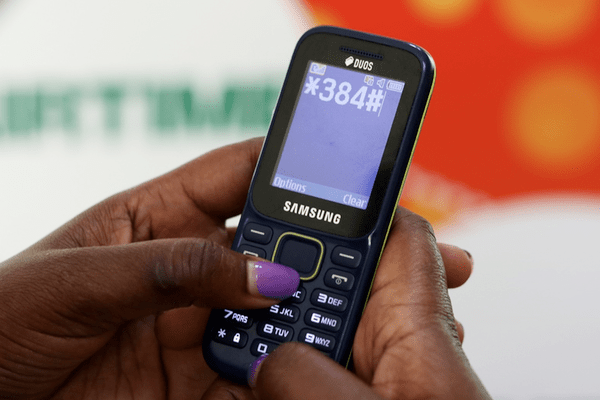
Under the new model, users receive a clear prompt before every USSD transaction indicating the $0.0047 charge. They must explicitly agree before the session continues, improving transparency and giving users control and consent over the billing process.
Increased accountability is also a major feature. The charge is only applied after the user’s bank confirms readiness to process the transaction—greatly reducing the risk of being charged for incomplete or failed transactions.
To improve consistency, a standardised messaging format is now used across all mobile networks. No matter the provider, users will receive uniform notifications, making it easier to understand charges and track transaction status.
“USSD airtime and data top-ups remain free when users bypass the root code and use direct strings,” explained Linda Saint-Okafor, Chief Enterprise Business Officer at MTN Nigeria.
“For example, *737# is GTBank’s root string and attracts a charge. But using a specific command like 73710,000# for airtime doesn’t.”
Though the USSD charge remains unchanged, the location of the deduction has shifted—from bank account to airtime. This change is critical for multiple reasons:
- Clarity: Users now see and approve the charge before the transaction.
- Fewer errors: Deductions are only made if the bank is ready to process the request.
- Trust: Years of unclear billing have undermined faith in mobile services; this system rebuilds that trust.
- Standardisation: A consistent format reduces confusion and enhances user experience.
This shift could serve as a blueprint for reforming mobile financial services across Africa, particularly where telecom infrastructure plays a central role in promoting financial inclusion.