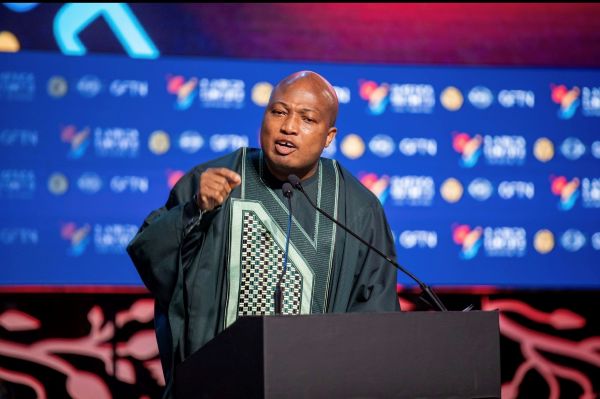
Ghana’s Foreign Minister, Samuel Okudzeto Ablakwa, has strongly condemned rising xenophobic attacks on African in South Africa, warning that hostility towards fellow Africans threatens the continent’s integration and economic future.
Delivering a passionate address at the 3i Africa Summit 2026, the minister cautioned that Africa cannot pursue economic integration while simultaneously rejecting its own people.
“We cannot be talking about trade and integration while declaring fellow Africans unwanted,” he said.
His remarks come amid renewed concerns about xenophobic attacks specifically on African in South Africa, where foreign nationals have often been targeted during periods of economic hardship.

The minister stressed that migrants from other African countries should not be scapegoated for domestic challenges such as unemployment or crime.
“If individuals break the law, let law enforcement deal with them. But we must not take the law into our own hands,” he warned.
He contrasted Africa’s response to migration with Europe’s handling of the Ukraine crisis, where millions of displaced Ukrainians were welcomed, integrated and supported through special policies across countries such as Germany and Poland.
“In Africa, we say ‘Ghana must go, Nigeria must go’—but go where?” he questioned.
He further highlighted the humanitarian crisis in Sudan, noting that over 14 million people have been displaced, yet African nations have not responded with the same level of coordinated support and integration seen elsewhere.
The minister called for a shift in mindset, urging Africans to embrace unity, compassion and shared identity.
“We are one people. We are one family,” he said.
He revealed that Ghana has formally petitioned the African Union to address xenophobia at an upcoming meeting, stressing the need for bold continental action.
According to him, Africa’s future depends on stronger regional integration, increased intra-African trade and mutual respect among its people.
“Hatred destroys; it does not build,” he stated, urging Africans to choose cooperation over division.
He concluded that only through unity, partnerships and belief in African potential can the continent achieve true economic liberation.