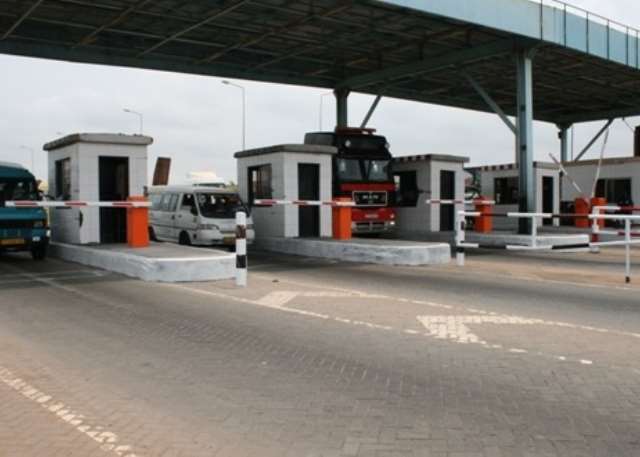
Parliament has approved a 20-year concession agreement for the reintroduction of electronic toll collection on roads and bridges across Ghana under a public-private partnership aimed at boosting funding for road maintenance and improving revenue collection.
The agreement establishes the legal and commercial framework for the financing, design, construction, operation, maintenance and eventual transfer of a nationwide electronic tolling system.
Under the arrangement, the Ministry of Roads and Highways, acting on behalf of the Government of Ghana, has entered into the agreement with a special purpose vehicle to be incorporated by Rock Africa Limited, which will mobilise private investment to develop and operate the electronic tolling system.
The project will cover 66 tolling locations across 13 operational corridors, comprising 38 existing toll stations and 28 newly identified strategic locations.

The electronic tolling system is expected to restore a sustainable source of funding for road maintenance while improving operational efficiency, reducing revenue leakages and enhancing transparency through internationally accepted electronic toll collection technology.
The agreement provides for a revenue-sharing arrangement under which the Government of Ghana will receive 70 per cent of gross toll revenues, while the concessionaire will retain the remaining 30 per cent.
The concession will run for 20 years, including three years for the design and construction phase and 17 years for operations and maintenance. At the end of the concession period, all project assets will be transferred to the Government of Ghana.
The concession agreement was presented to Parliament on Wednesday, July 29, 2026, by the Minister for Lands and Natural Resources on behalf of the Minister for Roads and Highways before being referred to the Roads and Transportation Committee for scrutiny.
Presenting the committee’s report, Chairman of the Roads and Transportation Committee, Isaac Adjei Mensah, recommended approval of the agreement, after which the House adopted the report and approved the motion.
Seconding the motion, Ranking Member on the committee, Kennedy Osei Nyarko, said the committee concluded that the reintroduction of road and bridge tolls would significantly boost the Road Fund and improve road maintenance financing.
He recalled that the previous administration suspended road toll collection in 2022 to allow for reforms and expansion of the tolling system.
“By the time the previous administration exited office, Cabinet had already approved a roadmap for the reintroduction of road tolls. I am happy that the current government did not abandon the previous Cabinet’s approval of the reintroduction of road tolls,” he said.
Supporting the motion, Bimbilla MP Dominic Nitiwul explained that the former government abolished road tolls to ease the financial burden on Ghanaians following the introduction of the Electronic Transfer Levy (E-Levy).
“When we sat in Cabinet and the e-levy came, we knew it would bring some bit of burden to Ghanaians. We calculated that we could get as much as GH¢10 billion then on the e-levy, but we realised that the easiest way was to remove the road toll that was giving us less than GH¢100 million,” he said.
Mr Nitiwul expressed support for the agreement, noting that the electronic tolling system would eliminate long queues and inconvenience for motorists.
“The road tolls are electronic, and it is 20 years; I think it is good for us to support it,” he added.