Minister for Trade, Agribusiness and Industry, Elizabeth Ofosu-Adjare, has criticised some businesses for refusing to reduce prices even after economic conditions improve, warning that such practices undermine public trust and confidence in the private sector.
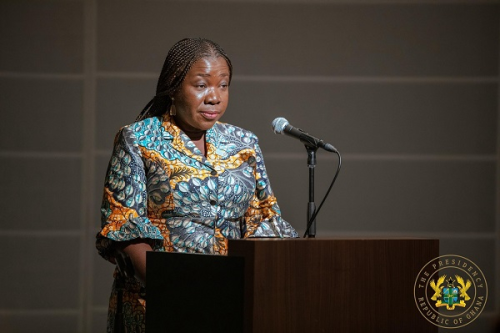
Speaking at the 10th Ghana CEO Summit in Accra, the Minister said many enterprises were quick to increase prices during periods of inflation and economic hardship, but often failed to reverse those increases when inflation eased and production costs declined.
“But what is not understandable is the refusal of some enterprises to reduce prices once the underlying conditions improve,” she stated.
According to Mrs Ofosu-Adjare, businesses have both a moral and reputational responsibility to adjust prices fairly when economic pressures subside.

“If you raise prices because of genuine economic pressures, then there is also a moral obligation and reputational responsibility to bring them down when conditions improve,” she stressed.
She warned that the credibility and legitimacy of the private sector depended largely on whether the public believed businesses were exercising their pricing powers responsibly.
The Minister made the remarks while addressing chief executives, policymakers, development partners and industry leaders at the summit, where she called for stronger collaboration between government and the private sector to drive Ghana’s economic transformation agenda.
Mrs Ofosu-Adjare stated that Ghana’s transformation could not be achieved through policy pronouncements alone, but would require practical action, innovation, industrialisation and strategic leadership.
She said President John Dramani Mahama’s administration remained committed to transforming the economy through investment, value addition and support for local industries.
According to her, government’s industrialisation initiatives were already helping to reshape the economy by strengthening support systems for industry and encouraging local production.
She stressed the need for Ghana to focus on producing more, processing more and exporting more value-added goods in order to create sustainable jobs and competitive businesses.
“We must strengthen the link between agriculture and industry by connecting farmers, processors and factories to build productive value chains that generate decent jobs and competitive businesses,” she said.
Mrs Ofosu-Adjare further underscored the importance of leadership in economic transformation, noting that policies alone could not deliver results without commitment and implementation.
“Policy does not implement itself. It takes leadership that is willing to make difficult decisions, remain accountable and stay committed to the course,” she stated.
The Minister also highlighted the government’s proposed 24-hour economy agenda, describing it as an example of the structured and long-term approach needed to sustain economic growth and business continuity.
On technology and innovation, she urged businesses to embrace technological advancement to improve productivity, competitiveness and operational efficiency, noting that technology had become a major driver of industrial growth globally.
Mrs Ofosu-Adjare reiterated government’s readiness to work closely with the private sector to promote industrialisation, export development, value addition and opportunities under the African Continental Free Trade Area (AfCFTA).
“Our aim is simple; to build an economy that produces more, exports more and creates better opportunities for our people,” she said.
She also commended the Chief Executive Network Ghana for sustaining the Ghana CEO Summit over the past decade and for providing a platform for dialogue between government and industry leaders.
The Minister concluded by urging businesses to continue partnering government in building a stronger, more productive and competitive Ghanaian economy.