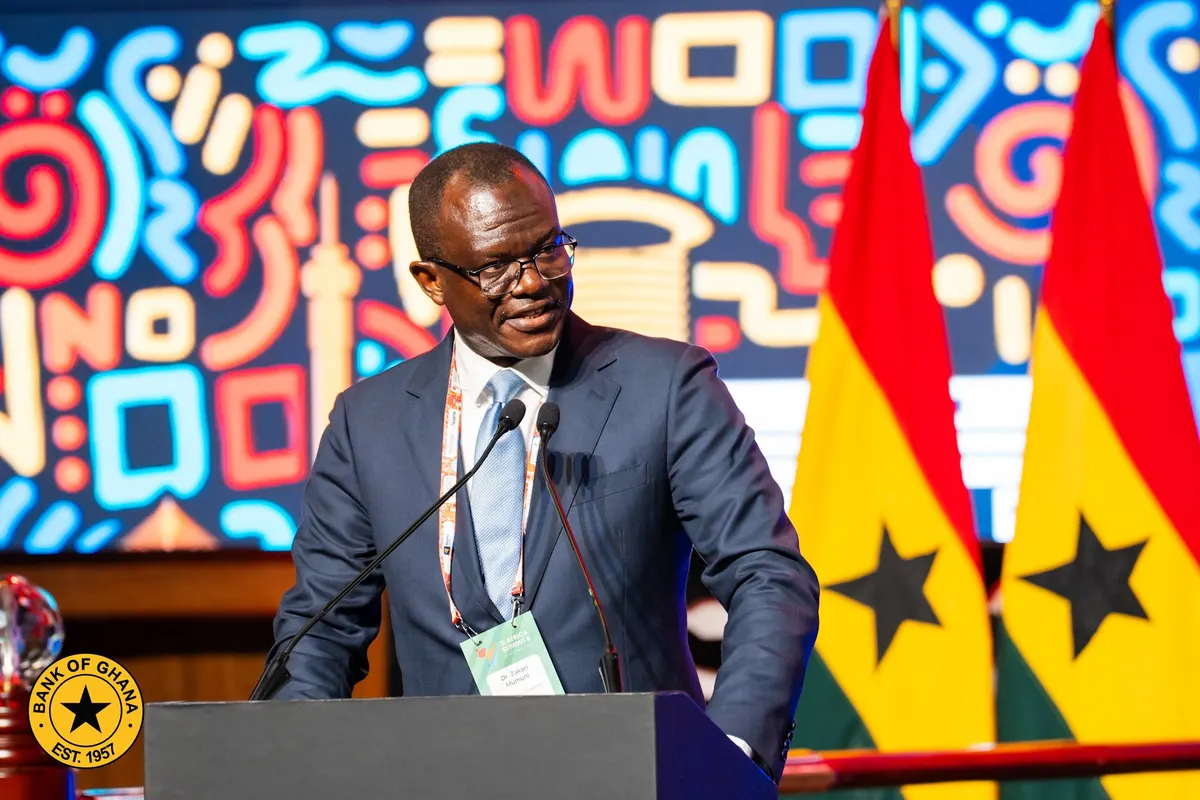
Africa’s rapid gains in financial inclusion could unravel unless countries urgently integrate fragmented payment systems into seamless, real-time networks, First Deputy Governor of the Bank of Ghana, Dr Zakari Mumuni, has cautioned.
Speaking at the 3i Africa Summit 2026 in Accra, Dr Mumuni described inclusive instant payments as the “next layer” of economic infrastructure required to unlock Africa’s digital transformation.
He noted that while mobile money, fintech platforms and digital wallets have significantly expanded access to financial services, the continent’s payment backbone remains fragmented, costly and poorly interconnected.
“Africa has made progress in access, but without integration, that progress cannot translate into full economic participation,” he said.

Dr Mumuni argued that the next phase of growth must focus on usability, ensuring that financial systems work seamlessly across platforms, sectors and borders.
He pointed out that high transaction costs, siloed ecosystems and limited interoperability continue to constrain the efficient movement of money, undermining both businesses and consumers.
Inclusive Instant Payment Systems (IPS), he said, offer a practical pathway to resolving these inefficiencies by enabling real-time, low-cost transactions across interconnected networks.
Such systems, when properly implemented, link financial institutions, fintech firms and users into a single ecosystem, allowing value to flow freely and efficiently.
The Deputy Governor outlined the broader economic impact of instant payments, noting that they can accelerate business operations, improve liquidity management and boost productivity.
He added that households, especially underserved populations, stand to benefit from faster, more affordable financial services, while governments can enhance revenue collection, transparency and the delivery of targeted interventions.
For financial institutions, he said, the data generated from instant payments can unlock new opportunities in credit scoring, savings products and risk management.
Despite these advantages, Dr Mumuni acknowledged that no African country has yet achieved a fully inclusive instant payment system at scale.
He stressed that this reflects a deeper challenge: infrastructure alone is insufficient without deliberate efforts to ensure accessibility, affordability and trust.
“A system that excludes segments of society cannot function as true economic infrastructure,” he emphasised.
While central banks have laid strong regulatory foundations, Dr Mumuni said integration requires more than policy frameworks.
He called for coordinated action among regulators, payment system operators, financial institutions and fintech firms to build interoperable systems that eliminate friction and expand access.
He also highlighted the need for reforms, including harmonised eKYC processes to ease onboarding, aligned licensing regimes to support innovation, and stronger cross-border collaboration to enable regional payment connectivity.
Dr Mumuni noted that Ghana has made significant strides, including deploying multiple instant payment platforms and advancing interoperability initiatives.
However, he stressed that the country’s goal is not merely to build systems but to ensure they are inclusive, affordable and widely trusted.
He concluded by urging stakeholders to act with urgency in transitioning from fragmented payment systems to integrated, continent-wide infrastructure.
“The technology exists and the benefits are clear. What remains is execution,” he said.
He called on participants at the summit to commit to building inclusive instant payment systems that will drive growth, expand financial inclusion and strengthen Africa’s economic resilience.