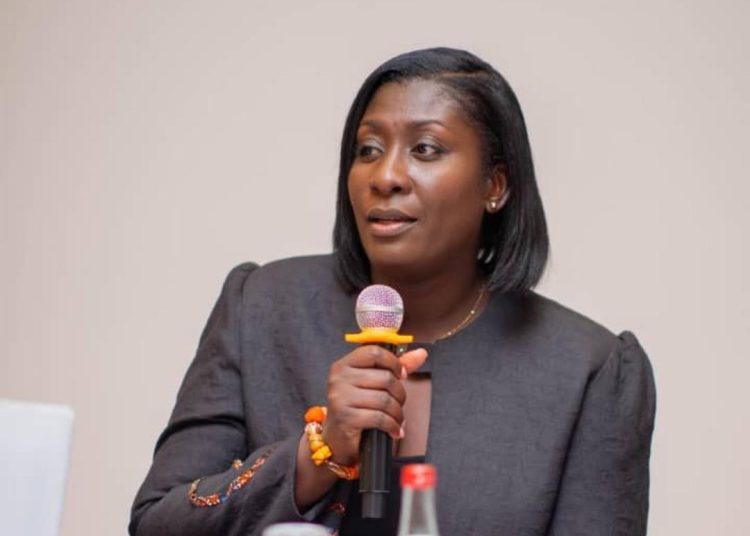
The Chief Executive Officer of the Ghana Chamber of Telecommunications, Sylvia Owusu-Ankomah, has described artificial intelligence (AI) and emerging digital technologies as a powerful medium capable of democratising communication across Africa if properly governed and harnessed.
Speaking at the inauguration of “Africans Communicating Africa”, she noted that the continent stands at a pivotal moment where technology can expand access to information, personalise services and give more people a voice within the digital ecosystem.
According to her, telecom operators are already deploying AI-driven tools to optimise networks and improve service delivery, allowing for customised user experiences based on behavioural patterns and preferences.
“This technology is enabling communication in ways we have not seen before,” she said, explaining that individuals can now access tailored content and services, breaking traditional barriers in information flow and access.

However, she cautioned that while AI presents an opportunity to democratise communication, it also introduces significant risks, particularly around misinformation, data integrity and the manipulation of public narratives.
She stressed that journalists and media practitioners, in particular, face growing challenges in verifying information in an AI-driven environment where distinguishing truth from falsehood is becoming increasingly complex.
Beyond media concerns, she warned that algorithm-driven systems could influence governance and political discourse if not properly regulated.
“We must ensure that the systems we build empower our people rather than distort realities,” she noted.
Madam Owusu-Ankomah emphasised that for Africa to fully benefit, there must be strong ethical and governance frameworks guiding the deployment of AI technologies.
She further highlighted concerns about data sovereignty, pointing out that much of the continent’s data infrastructure and computing power remain outside Africa, limiting control over how technologies are developed and applied.
To address this, she called for increased investment in local infrastructure and innovation ecosystems to support the continent’s digital independence.
According to her, building Africa’s own technological capacity will ensure that AI is adopted in ways that reflect local realities and priorities rather than external influences.
She concluded that while AI holds the promise of bridging communication gaps, failure to put the right systems in place could instead widen inequalities.
“This is our opportunity to use technology as a medium to democratise communication, but it must be done intentionally, responsibly and with Africa at the centre,” she added.