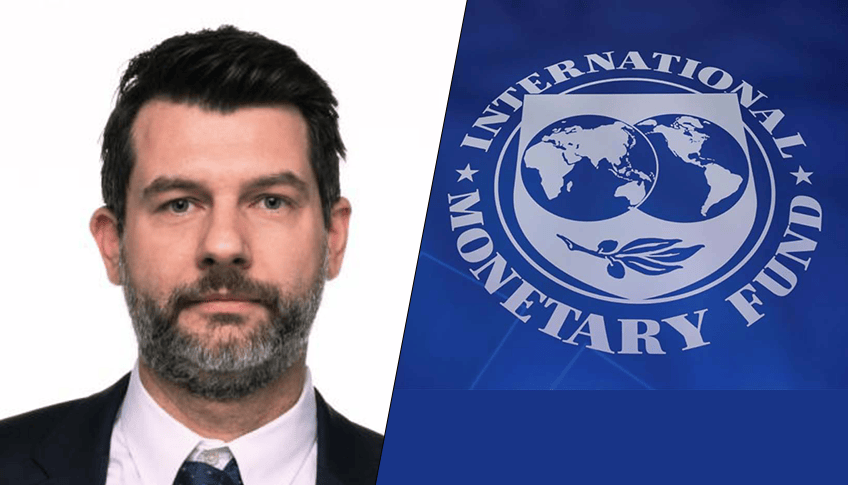
Dr Adrian Alter, IMF Resident Representative and Head of Office in Ghana, has urged Ghana to sustain policy continuity and protect hard-won economic gains as the country seeks to build resilient economic pillars for the next decade.
Speaking during a panel discussion at the Business Roundtable Extended under the theme “After the Corrections: Building Resilient Economic Pillars for the Next Decade”, Dr Alter said Africa’s economic transformation over the next quarter century must go beyond the exploitation of natural resources.
He said the continent’s future would depend increasingly on the quality of its institutions, consistency in policymaking and the creation of opportunities for private sector growth and jobs.
Policy continuity critical to economic transformation

Dr Alter identified policy continuity as the most important requirement for sustaining successful economic transformation.
He said Ghana’s immediate challenge was to maintain the momentum of reforms, protect the gains already achieved and provide confidence that sound policies would continue.
According to him, the Policy Coordination Instrument (PCI) could serve as an important policy anchor by providing a framework for maintaining reform momentum and strengthening credibility.
He said the instrument would also support the Government’s medium-term objectives and commitments while providing independent assessment and regular monitoring.
Dr Alter noted that Ghana was not alone in engaging with the IMF through such an arrangement, citing Serbia and Rwanda as examples of countries that had undertaken similar engagements.
He said the partnership was intended to help fill policy gaps and preserve the momentum of reforms.
IMF backs stronger foundations for private-sector growth
Dr Alter said the PCI would focus on laying the foundations for private and inclusive growth, with emphasis on fiscal discipline and sustainability, domestic revenue mobilisation and stronger public financial management.
He also stressed the need to contain fiscal risks associated with state-owned enterprises and improve governance and transparency in the reporting of large state-owned enterprises.
Beyond public-sector reforms, he said improving the business environment would require sustained dialogue among the Government, private sector and wider society.
He said such collaboration was necessary to move Ghana into its next phase of economic development.
Energy diversification needed to cushion external shocks
Dr Alter identified energy as one of the key ingredients for private-sector development and greater economic resilience.
He called for a diversified energy mix that combines hydro and renewable sources, arguing that this could help Ghana alleviate some of the shocks affecting the economy.
He also highlighted the need to maximise the use of Ghana’s domestic oil and gas resources and increase refining capabilities.
According to him, these measures could provide greater protection against external shocks, including disruptions linked to the conflict in the Middle East.
Financial sector reforms essential for private-sector expansion
The IMF representative also highlighted the importance of a stronger financial sector in supporting private-sector growth.
He said continued efforts were needed to strengthen the banking system and address non-performing loans to create room for new lending to the private sector.
He further called for expanded access to financial services and greater use of digital services.
Dr Alter said energy and finance, alongside policy continuity and public-sector reforms, were critical to Ghana’s next phase of development.
He said progress in these areas should ultimately deliver better infrastructure, stronger institutions and better use of public funds.
He stressed that the goal should not be stability for its own sake, but an economic environment capable of supporting sustained private-sector development and inclusive growth.