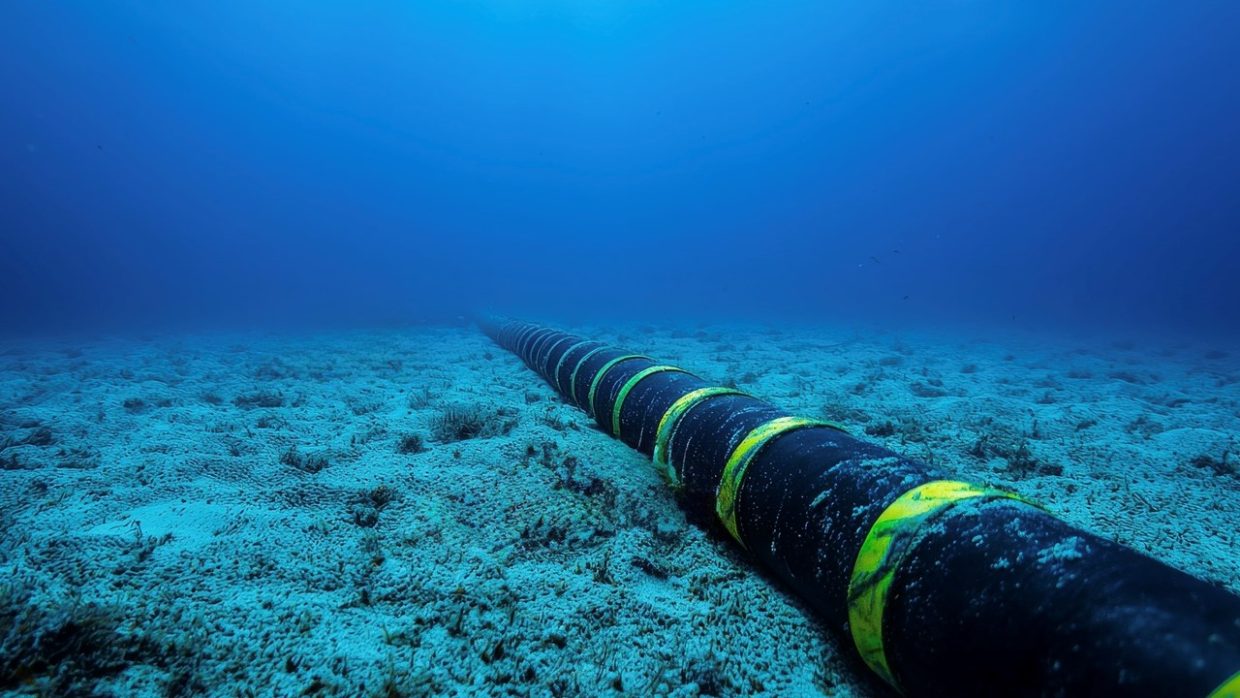
Global telecommunications operator Orange is supporting a new 20,000-kilometre subsea cable project called Via Africa, to link Nigeria with almost 20 other countries across Africa and Europe.
In Africa the cable is expected to land in Nigeria, Senegal, Guinea, Côte d’Ivoire and Mauritania, as more consortium members join, further landing locations might be added.
Via Africa, which is being developed by an Orange-led partnership, will be one of the continent’s longest undersea cable systems, spanning more than 20,000 kilometres across the Atlantic. At 45,000 kilometres, Meta’s 2Africa is still the longest submarine cable in the world.
Eight submarine cables—the most in West Africa—are located in Nigeria, one of the continent’s biggest internet and data markets. As internet usage and data traffic increase nationally, the nation still has to deal with ongoing fibre cuts, vandalism, and network congestion.

In an interview, Orange Wholesale CEO Michaël Trabbia stated, “Every two days somewhere in the world you have a cable cut or failure.” “Different routes are necessary to ensure that you maintain connectivity even in the event of one or two cable cuts.”
According to Trabbia, the project is still open to new partners, and as more operators join the consortium, the final landing locations and participating nations are anticipated to change.
The majority of Africa’s international bandwidth is still concentrated in a small number of markets, despite the continent having 77 active or planned subsea cable systems as of 2025, according to TeleGeography.
Just five nations—Nigeria, South Africa, Egypt, Algeria and Kenya—account for more than half of Africa’s international bandwidth, demonstrating the continent’s continued uneven distribution of digital infrastructure.
The new cable is being installed at a time when disruptions impacting current underwater systems have shown how susceptible many African nations are to single points of failure.
Several cable failures around the coast of West Africa have recently caused simultaneous disruptions to internet services in a number of nations, slowing enterprise operations, banking platforms, fintech services and international connectivity.
According to Trabbia, the Via Africa project intends to lower those risks by introducing more varied and innovative routes instead of depending on already-existing ones.
”You avoid single points of failure more when the routes are diverse,” he stated.
Older subsea cables are becoming less effective, according to Trabbia, because newer systems with better technologies can handle much more traffic.
”The lifespan of a cable is approximately 20 to 25 years,” he stated. “Cables become much less significant contributors to overall traffic after ten years because the new cables are much more efficient.”
The infrastructure is being built to support long-term expansion in internet demand throughout Africa, according to Trabbia, even though Orange has not made the cable’s final capacity public.
Via Africa will travel the Atlantic corridor, linking West Africa directly to Europe, in contrast to a number of current cable systems that travel through Mediterranean routes.
Building several cable routes, according to Orange, is essential to the project’s strategy to maintain internet services even in the event that one cable is broken or goes down.
Large data centres and cloud providers hoping to increase their investments in digital infrastructure throughout Africa may be drawn to the cable’s expected termination at significant data centres.
According to Trabbia, “we see hyperscalers investing more and more in Africa.” “This cable is one of the major infrastructure projects to connect Africa, so it might draw hyperscalers.”
Orange predicts that once consortium agreements are established, the project could take three to four years to complete. However, construction schedules have not yet been finalised.
Additionally, the business stated that the cable will have more recent protection technology intended to lessen damage from ship anchors and other marine activities that regularly impact subsea systems.
In order to reduce flaws and outages, modern subsea cables are increasingly buried up to 2,000 meters deep and strengthened with extra physical safety layers, according to Trabbia.
Via Africa was first revealed on May 12, 2026, during the Africa Forward Summit in Nairobi, which was attended by French President Emmanuel Macron, African heads of state, and European and African business executives.
During the meeting, Orange revealed intentions to broaden its digital goals throughout the continent, including training over three million youth in cloud computing, cybersecurity, artificial intelligence and digital entrepreneurship by 2030.
Additionally, the business stated that it intends to support over 500 additional startups in industries like healthcare, agriculture, fintech, education and e-commerce while growing its network of Orange Digital Centres from 50 to 100 throughout Africa and the Middle East.
The larger push illustrates how telecom infrastructure is becoming more and more important to Africa’s aspirations for a digital economy, particularly as companies and governments increase their investments in online services, cloud computing, artificial intelligence and digital payments.
Trabbia stated, “We need this cable to achieve the continent’s digital ambition.” “Only if we have the proper infrastructure in Africa will all of this be possible.”