Private sector players in the digital payments industry across Africa have been ready for years to integrate and drive cross-border payments to boost intra Africa trade, but they are unable to because there is no regulatory harmonization to deal with currency differences and ensure seamless cross-border transactions.
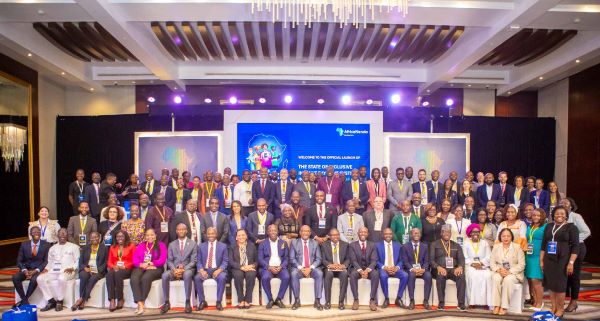
This stack reality formed the basis of a rather direct and strong remark by the CEO of Ghana Interbank Payments and Settlement Systems (GhIPSS), Archie Hesse, during a panel discussion session at the launch of the 2024 edition of the State of Inclusive Instant Payments Systems (SIIPS) in Africa Report.
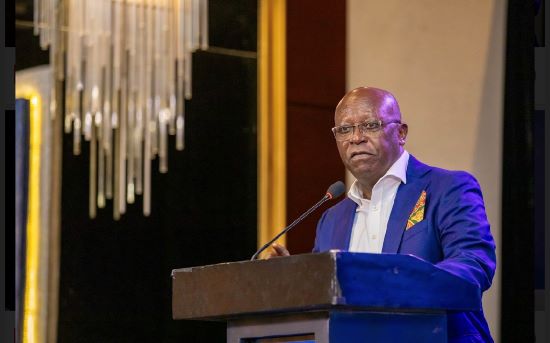
He stated thus: “The only way to ensure smooth cross-border payments in Africa is to deal with the problem of exchange rate between the different currencies on the continent without pegging it to the dollar. This means central bank governors across the continent will have to sit and come up with a solution to that problem. Until we do that, we will keep coming year after year and holding conferences like this but to no avail.”
Archie Hesse’s declaration, which got participants at the launch talking, is similar to statement by the Senior Vice President of MTN Group, in charge of Markets, Ebenezer Asante, at last year’s Africa Prosperity Forum. He said then that the only thing standing in the way of seamless cross-border digital payments in Africa is the “tyranny of sovereignty”, where regulators in the various countries are more interested in protecting their respective sovereignties at the expense of integrating to boost trade on the continent through digitalization.

The SIIPS Report, put together by the AfricaNenda Foundation in collaboration with the World Bank and the United Nations Economic Commission for Africa (UNECA) sufficiently highlights the need for regulatory harmonization across the continent to drive cross-border payments in Africa.
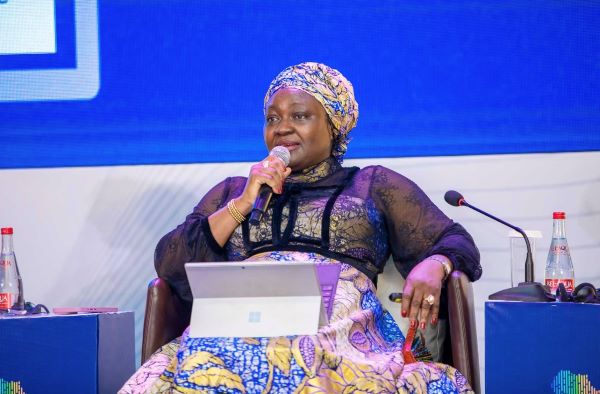
In discussing the SIIP Africa Report with Techfocus24, Deputy CEO of AfricaNenda, Sabine Mensah, noted that currently, there are two regional economic and monetary unions which have same currencies and are therefore able to do seamless cross-border payments among member countries. The two are the West Africa Economic and Monetary Union, made up of eight Francophone countries which use same currency – the CFA, and the Economic and Monetary Community of Central Africa, made up of six countries which also use same currency – the CFA.
“If you take it out to the rest of Africa it becomes a bit more complex because there are completely different currencies.
“I think our regulators have a duty to really look at how to harmonize the regulatory and policy frameworks across Africa to enable seamless cross-border transactions. The fact that we have different currencies is still a challenge but not one that cannot be overcome. It is just a matter of our regulators coming together to enable the ecosystem for cross-border transaction in spite of the currency differences,” she said.
Sabine Mensah noted that currently there are two models of how to achieve seamless cross-border payments – one being the European Union model based on the adoption of a common currency – the Euro; while in the Asian model, different domestic payment systems have been connected to drive cross-border payments, in spite of the differences in currencies.
According to her, there are two levels to achieve this, no matter which model Africa chooses. The policy level should align on what the currency exchange rate will be, and then at the providers’ level, there should be access to all, including banks, fintechs, merchants and other stakeholders across borders. This ensures inclusivity.
Passporting Licenses
The AfricaNenda Foundation Deputy CEO also proposed passporting of licenses as one way to enable easy cross-border payments. Passporting license allows a firm registered in one country to do business in any other country without further authorization.
In the EU for instance, due to the passporting licensing policy, fintechs and merchants are able to obtain a license in one EU country and that gives them access to all other EU countries. But in Africa, payment service provider (PSP) licenses are still country specific, and that is a barrier to cross-border payments.
Not only are PSP licenses in Africa limited to one country, but it also takes 18 to 24 months to obtain one PSP license in a typical African country, compared to just about three months to obtain a similar license in the EU, which gives access to all EU-member countries.
Sabine Mensah said AfricaNenda is keeping a very keen eye on that space and engaging at various levels to see whether Africa will leverage the existing regional systems, connect domestic systems (like in Asia), or go the EU route to ensure seamless cross-border payments on the continent, which is critical to intra-continent trade, particularly within the context of Africa Continental Free Trade Area (AfCFTA) initiative.
She however noted that the need for regulatory harmonization goes beyond currencies, which in under central banks; it extends to regulations around digital public infrastructure (DPIs), identification systems and cybersecurity frameworks, all of which are handled by different regulators in the various countries.
Following the Ghana Example
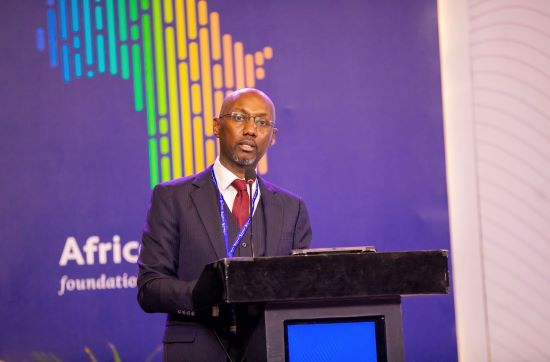
On his part, the CEO of AfricaNenda Foundation, Robert Ochola said there is has become critical for all Africa countries to follow the Ghana example and harmonize payment systems by moving to one switch which is interoperable, just like Ghana has done with GhIPSS.
According to him, per the forecast done by AfricaNenda Foundation, having one interoperable switch at the domestic level will at least bridge the current inclusivity gap by 4% every year, and that will reduce the number of adults excluded from the financial sector in Africa from 400 million to 320 million by 2030.
“It has therefore become critical for all central banks on the continent to mandate all payment service platforms and mobile money operators to integrate with one interoperable domestic switch so that it will be easy to then connect all those switches across the continent to drive cross-border payments,” he said.
Glimpse of Hope
Following the clarion call for regulatory harmonization, Ghana and Rwanda have at least launched Africa’s first ever License Passporting Framework, which sets the tone for regulatory harmonization between the two countries and eliminates duplicative licensing requirement for cross-border transaction.
The initiative allows financial technology (fintech) companies licensed in one country to operate seamlessly in the other without another license. This reduces regulatory barriers and foster innovation.
Supported by the NextGen Digital Public Infrastructure Framework and key partners such as the Global Finance & Technology Network, the Pan-African Payment & Settlement System (PAPSS), and most importantly, the central banks of the two countries, the initiative marks a significant milestone in Africa’s journey toward regulatory harmonization and digital transformation.