
In a country where nearly a quarter of all loans go unpaid, Ghana’s credit market faces serious challenges. But one local fintech solution, myCreditScore, is quietly rewriting the script.
The Bank of Ghana (BoG) recently announced that it is implementing new measures to address the issue of non-performing loans (NPLs) in the banking sector, aiming to cap NPL ratios at 10% of gross loans by December 2026.
In the face of this target set by the central bank, the data-driven lending platform, myCreditScore, promises to help regulated financial institutions to drastically reduce the incidents of unpaid loans through the use of data.
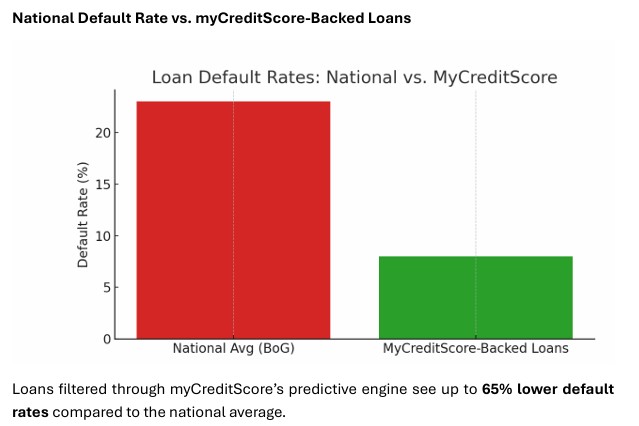
According to the latest myCreditScore Defaulter Pattern Analysis Report, loans backed by data from myCreditScore show significantly lower default rates than the national average of 23% non-performing loans (NPL).

Thanks to the predictive, data-driven scoring models, lenders using myCreditScore’s platform are making safer, smarter decisions – unlocking financial access for thousands while reducing risk.
This means, myCreditScore may be the solution banks are looking for to drive NPL down to the 10% target that the the central has set for 2026.
Let’s explore why this matters and what the data reveals.
The National Problem: Default Rates at 23%
The Bank of Ghana reports a non-performing loan rate of approximately 23% – meaning nearly one in four loans go unpaid. These defaults cost banks billions of cedis annually, increase interest rates, and limit credit access for responsible borrowers.
The Smart Solution: Predictive Credit Scoring That Works
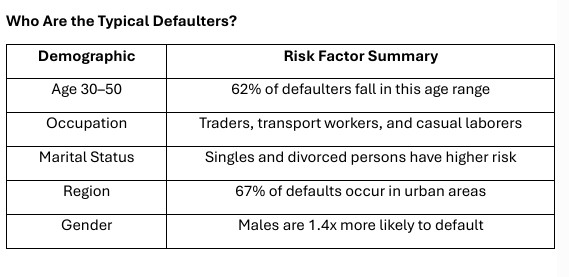
myCreditScore analyzed a sample of over 21,000 credit records, including 2,061 confirmed defaulters, to detect behavioral patterns and demographic risk factors. The findings weren’t just insightful – they were game-changing.
Why People Default: The Traps
The data shows that defaulting isn’t random – it follows patterns:
- Micro-loan traps: 73% of defaulters had loans under GHS 25,000
- Income instability: 68% worked informally or seasonally
- Over-leveraging: Average defaulter had 3+ loans and 45%+ debt-to-income ratio
- Short credit histories: 67% defaulted within 6 months of opening an account
How Does myCreditScore Work It’s Magic?
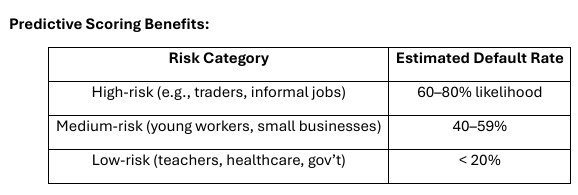
myCreditScore applies a real-time scoring system that factors in:
- Age, occupation, location, marital status
- Social media footprint and payment behavior
- Tiered risk categorization and credit limits
- Rewards for positive repayment behaviour
Real Impact: Safer Lending, More Inclusion
According to projections in the report, myCreditScore-backed lenders can expect:
- 25–30% reduction in defaults in 6 months
- 40% faster loan decisions
- 50% lower operational costs for small loans
- A growing customer base built on trust
A Path Forward: Smarter Lending for Ghana’s Future
Ghana’s economic growth depends on accessible, reliable credit – especially for small traders, informal workers, and young entrepreneurs. myCreditScore is proving that with the right data, default is not destiny.
Lenders, banks, and savings & loans companies looking to reduce risk while expanding credit access should take therefore take note. The future of lending in Ghana is data driven – and the results are already speaking for themselves. If you’re a lender or financial institution in Ghana, consider integrating myCreditScore into your credit assessment workflow.
No developed economy operates without credit and loans. With more than 95% of transactions in Ghana processed as debit transactions, it is very clear that smarter decisions today will build stronger credit systems for our growing economy.