Dear Mr Powerful Person,
I know you have missed me. Various theories have been proposed about my silence. Some said I had been gagged, others claimed I was bribed into silence, and a third group suggested I had given birth to twins and was busy changing diapers. Well, regardless of the reason, I am back as the voice of the Ghanaian child in your ear. And like the single mosquito that disturbs sleep, I will give you no rest until the Ghanaian child has a seat at the table of life.
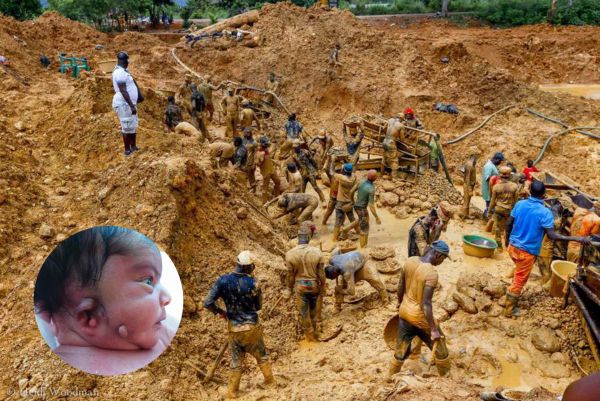
Some weeks ago, Mary Birago (names changed) brought her baby to the clinic. The baby was warmly wrapped in a cloth, and as she carefully uncovered him, she looked at my face for a reaction. My years of training and experience paid off; I remained calm as I looked into the face of a baby born with congenital malformations—an abnormal baby. I touched his soft, round cheek gently, and he turned his mouth toward my hand, seeking to feed; the rooting reflex. The mother visibly relaxed. She was a young teacher, posted to work in the heart of the galamsey region.
She had many questions for me: Will he walk? Will he talk? Will he go to school? Will he survive? I answered her questions as best as I could, using the available evidence. If he did survive, he would need multiple, expensive surgeries. Then she asked the question I had been dreading:

“Doctor,” she said softly, “was it something I did that caused this to happen to my baby?” I was silent. We know the environment has a profound impact on child health and development. We know that the first three months of pregnancy are critical, as all the organs are forming and developing. Any toxin the mother eats or drinks, or any illness she suffers, can have devastating effects on the baby’s growth.
Allowing the dumping of heavy metals in the environment through galamsey activity means we are actively feeding the next generation with poison. We know that heavy metals cause abnormalities in babies and have harmful effects on the kidneys, brain development, and behavior of young children. Children living near such sites are prone to breathing problems, food insecurity (as farmlands are destroyed), increased risk of disease due to poor living conditions, and of course, child abuse. And what we don’t know yet may be even more worrying.
I didn’t know how to tell her that it wasn’t her fault. It was our actions—and inactions—that had harmed her baby.
Do you remember the story of the bird, the climbing plant, and the tortoise? The bird was singing loudly, and the tortoise sent a message through the climber, warning the bird to stop lest a hunter kill it. The climber was unconcerned and refused to carry the message. A hunter came and shot the bird, which fell near the tortoise. The hunter picked them both up for dinner. To tie them, he needed a string—and he cut down the unconcerned climber.
In the end, they all perished. Those who were at fault, those who were unconcerned and those who were concerned all perished. We all know who we are in this story. At the end of the day, we are all affected by galamsey.
I remembered her question as I drove through a galamsey region last month. I was struck by the brutal scars on the earth but more by the abject poverty in the area. I expected streets of gold, an ultramodern hospital (where victims of heavy metal poisoning could be treated, with a dialysis unit for those whose kidneys had failed) and high quality schools. I foolishly thought some of the galamsey wealth would have been reinvested into the very places it had devastated. But instead, there were still schools under trees, mud houses on their last legs, and unkempt children running about in tattered clothing and oh, a road from hell. So, for what had this newborn sacrificed his life? For gold to line the pockets of a few?
I still don’t know how to respond to her question. It wasn’t her fault that she had accepted her posting to an area rife with galamsey. It wasn’t her fault that some Ghanaians had chosen their stomachs above the health and future of generations yet unborn. It wasn’t her fault that foreign nationals were polluting the water and food she depended on—acts they would never dare commit in their own countries. It isn’t her fault that we are lining our pockets with the blood of a generation unborn.
The baby stirred, and she began to nurse him lovingly. The child was oblivious to everything. Our actions—or inactions—had ensured he would never reach his potential. He suckled, unaware of the problems in his body, problems caused by adults who should have done better. He had been doomed to a life of difficulty by people he had never met nor wronged. How will future generations judge us for what we have done—or failed to do? The haze of politics has blurred everything and now ethics, science and patriotism are jettisoned.
To quote Wendell Berry: “We do not inherit the earth from our ancestors; we borrow it from our children.”
Last week, a doctor sent me a picture of a baby born with abnormal limbs. Today, another: a baby born without kidneys.
Mr. Powerful, what do I tell their mothers when they ask, “Doctor, was it something I did?”
Yours forever in the service of the Ghanaian child,
Dr. Adoma Dwomo-Fokuo