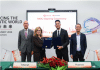
Ghana Water Ltd (GWL) has inaugurated the Governing Council of the Ghana Water Institute (GWI), tasking members with transforming the institution into the foremost centre for water-sector training, research, consultancy and professional development in West Africa within the next three years.
The inauguration, held in Accra, marks a significant milestone in Ghana Water’s efforts to strengthen institutional capacity, promote innovation and develop the skilled workforce required to improve water service delivery in Ghana and across the sub-region.
The Ghana Water Institute, a sub-subsidiary of GWL, evolved from the Ghana Water Training Schools established in 1965 to support human resource development within the company and the broader water sector. The Institute is expected to provide training, research, consultancy and professional development services while fostering innovation and knowledge-sharing.
Members of the newly inaugurated Governing Council include Prof. Afishata Mohammed Abujaja as Chairperson, Prof. Jasper Ayelazuno, Prof. Moro Adams and Dr Joseph Kojo Ansong as Executive Directors, while Dr Nashiru Zulkarnein serves as Rector.

Speaking at the ceremony, the Chairman of the Board of Directors of Ghana Water Ltd, Mr Eric J. Biliguo, described the establishment of the Institute as a strategic intervention aimed at securing the future of Ghana’s water sector and supporting the transformation of Ghana Water into a modern, diversified and financially sustainable utility.
He noted that the Government’s vision for the sector extended beyond the production and distribution of potable water to encompass innovation, knowledge creation, human capital development and institutional excellence.
”The establishment of the Ghana Water Institute is not accidental. It is a deliberate strategic intervention aimed at strengthening the future of the water sector and ensuring that Ghana Water Ltd evolves into a modern, diversified and financially sustainable enterprise,” Mr Biliguo said.
He explained that the Institute had been entrusted with developing a centre of excellence for training, research, innovation, consultancy and capacity building in key areas including water resources management, utility operations, engineering, technology, leadership and governance.
Mr Biliguo urged the Council to develop internationally recognised training programmes and certifications, forge strategic partnerships with universities and development partners, promote research that addresses operational challenges within the sector and generate sustainable revenue through consultancy and knowledge services.
He stressed that the success of the Institute would be measured not by the number of training programmes delivered but by the quality of knowledge generated and its impact on improving water-sector performance.
The Managing Director of Ghana Water Ltd, Mr Adam Mutawakilu, described the inauguration as another important milestone in the company’s transformation agenda.
According to him, the Institute would serve as a strategic hub for excellence in water-sector training, research, innovation and professional development while positioning Ghana as a regional centre for technical expertise and leadership development.
”The establishment and operationalisation of these subsidiaries reflect our deliberate efforts to strengthen institutional efficiency, diversify revenue streams, enhance capacity development and create long-term value for the people of Ghana,” Mr Mutawakilu stated.
He added that the administration of the Oath of Office and Oath of Secrecy to Council members underscored the importance of integrity, professionalism and accountability in the discharge of their duties.
In her acceptance remarks, the Chairperson of the Governing Council, Prof. Afishata Mohammed Abujaja, expressed gratitude for the confidence reposed in the Council and pledged to provide strategic direction, policy guidance and institutional oversight to support the growth of the Institute.
She emphasised that human resource development remained critical to achieving sustainable water service delivery and improving overall sector performance.
”The water sector is central to public health, economic development and national progress. However, sustainable water service delivery requires more than infrastructure. It requires skilled professionals, strong institutions, sound systems, innovation, ethical leadership and continuous learning,” she said.
Prof. Abujaja assured stakeholders that the Council would work diligently to establish the Institute as a credible centre of excellence for training, research, knowledge-sharing and professional development.
She further pledged to pursue partnerships with universities, regulators, professional bodies, development partners and industry experts to ensure that the Institute remained relevant and responsive to the evolving needs of the water and sanitation sector.
The Ghana Water Ltd Board challenged the Council to position the Institute as the leading water-sector training, research and consultancy institution in West Africa within the next three years, a target officials believe can be achieved through strong governance, innovation and strategic partnerships.